Tokyo vs Kyoto: where to stay and how to split your days
Updated
Tokyo vs Kyoto is really a choice between two kinds of days. Stay in Tokyo for food, neighbourhoods and easy day trips, or stay in Kyoto for temples, gardens and quiet mornings before the crowds. The Shinkansen takes about 2 hours 15 minutes between them, close enough to see both on one trip but too far to commute every day.
This guide sets out what each city does best, how the train between them works, how many nights to give each, and three ways to plan the trip: Tokyo only, a split stay, or a Kyoto-led trip. Each comes with a short day-by-day plan you can lift straight into your own trip.
Tokyo vs Kyoto at a glance
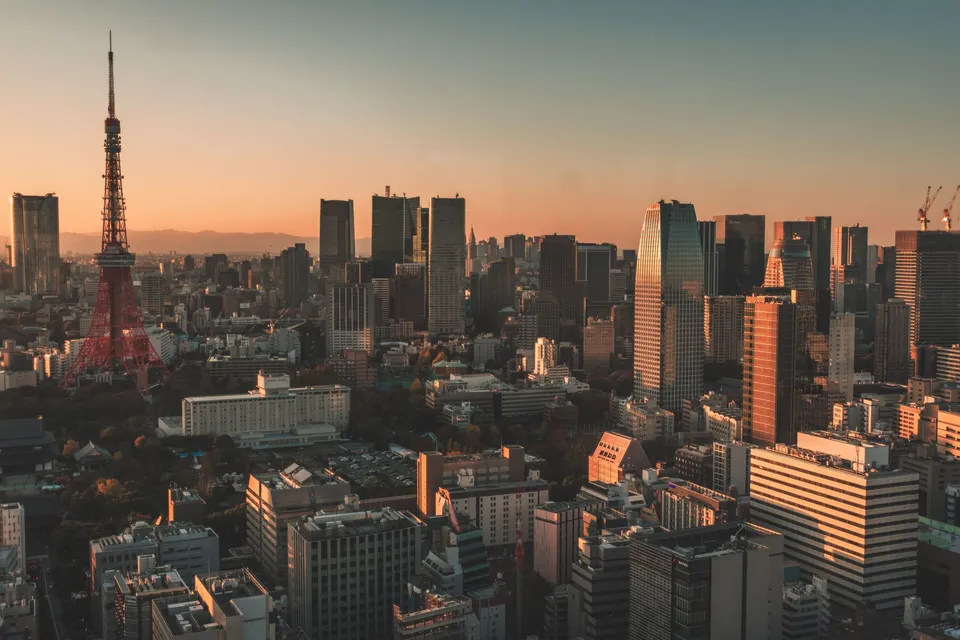
Tokyo is one of the largest cities in the world, a collection of very different neighbourhoods joined by trains that run every few minutes. It has the widest choice of food, hotels, shopping and evenings out, and Kamakura, Hakone and Mt Fuji are all easy day trips.
Kyoto is the old capital, smaller and slower, with more than a thousand years of temples, shrines and gardens. Its best sights are at their quietest early in the morning, which is the strongest reason to sleep there rather than visit for a day.
The short answer: for a trip of four nights or fewer, pick one city and stay put, with day trips. With five nights or more, split your stay, and give Tokyo slightly more nights than Kyoto.
What Tokyo does best
Tokyo rewards curiosity. Each district feels like its own town: Asakusa around Senso-ji, the shrine woods of Meiji Jingu next to the crowds of Harajuku and Shibuya, the department stores of Ginza, the late-night lanes of Shinjuku. The rail network makes it easy to see three or four of them in a day without planning far ahead.
It is also the food capital of the trip. Ramen counters, conveyor-belt sushi, depachika food halls and tiny bars sit on almost every street, and the Tokyo food guide has places worth crossing town for. For timed experiences, the city has teamLab, Shibuya Sky and Tokyo Skytree, all bookable ahead.
Tokyo is the right base if your group has mixed interests, if you want long evenings, if you are travelling with children who like theme parks, or if you want day trips to Kamakura, Hakone or Mt Fuji.
What Kyoto does best
Kyoto is about atmosphere at quiet hours. Fushimi Inari's torii gates are open all day and night, and they feel like a different place at 7:30 than at 11:00. The lanes below Kiyomizu-dera, the bamboo grove at Arashiyama and the gardens of the Zen temples are at their best before tour groups arrive, and that window only works if you are already in the city.
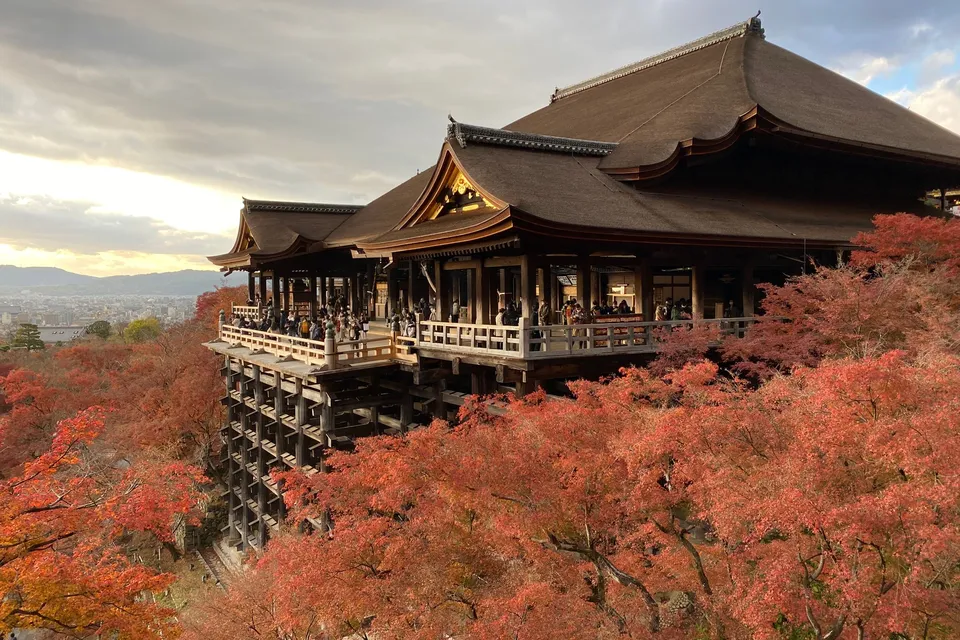
Evenings are calmer than in Tokyo: dinner in Pontocho or Gion, a walk along the Kamo River, and an early night. Kyoto is also where many travellers choose a ryokan or a machiya townhouse, which turns the stay itself into part of the trip. The Kyoto food guide covers kaiseki, tofu, tea and Nishiki Market.
Kyoto is the right base if temples, gardens and traditional streets are most of your list, if you want the early mornings, or if you also plan to see Nara or Osaka, which are both under an hour away.
How far apart are Tokyo and Kyoto?
About 450 km, and the Tokaido Shinkansen is the way to cover it. The main options, all approximate:
- Nozomi: Tokyo or Shinagawa to Kyoto in about 2 hours 10 to 15 minutes. It is the fastest train and runs several times an hour. A reserved ordinary seat is about 14,170 yen one way in the regular season, with small changes on off-peak and peak dates.
- Hikari: about 2 hours 40 minutes, with a few more stops. It is the fast train the Japan Rail Pass covers without an extra ticket.
- Kodama: stops at every station and takes much longer. Skip it for this trip.
Reserved seats go on sale at 10:00 Japan time one month before travel, and the Shinkansen booking guide explains the peak dates and how to book on smartEX. Count the move as half a day: checking out, crossing town to the station, the ride itself, and checking in at the other end.
Tip: heading from Tokyo to Kyoto, a seat on the E side of the car (the two-seat side) faces Mt Fuji on clear days.
Can you see Kyoto as a day trip from Tokyo?
You can, but it is the least rewarding way to see Kyoto. A day trip means more than 4 hours on the train, a return fare of about 28,000 yen, and arriving mid-morning, just as the temples fill up. One night in Kyoto costs the same train fare and gives you an evening in Gion and an early start at Fushimi Inari.
If time is very short, a better fit for a day trip from Tokyo is somewhere closer: Kamakura and Hakone are each under 2 hours away.
Choice 1: Stay in Tokyo, with day trips
Choose this for a short trip of three or four nights, or when Kyoto can wait for another visit. A short plan for four days:
- Day 1: Asakusa and Senso-ji in the morning, then Ueno or a river walk, with dinner in Ginza.
- Day 2: Meiji Jingu early, then Harajuku and Shibuya, and Shibuya Sky at sunset.
- Day 3: a day trip to Kamakura, Hakone or Mt Fuji.
- Day 4: Tsukiji Outer Market for breakfast, then Shinjuku and a last evening out.
Stay near a Yamanote Line station such as Shinjuku, Shibuya, Tokyo or Ueno, which keeps every district within easy reach. The 5 days in Tokyo itinerary has the full Tokyo days.
Choice 2: Split your nights between Tokyo and Kyoto
This is the plan most first trips want, and it suits five to eight nights. A short plan for seven days, with four nights in Tokyo and three in Kyoto:
- Days 1 to 4 in Tokyo: two neighbourhood days, one day trip to Kamakura, Hakone or Mt Fuji, and one free day for shopping, a museum or a timed ticket.
- Day 5: take a morning Shinkansen to Kyoto, leave your bags, and walk Higashiyama from Kiyomizu-dera down to Gion in the afternoon.
- Day 6: Fushimi Inari early, then Arashiyama in the afternoon.
- Day 7: Nara for the morning, or a slow day of gardens and Nishiki Market, before heading home.
Tokyo comes first because most international flights land there, and Kyoto comes last because Kansai International Airport is about 75 minutes from Kyoto Station on the JR Haruka. Flying into Tokyo and home from Kansai means the Shinkansen ride is the only long transfer of the trip. If you fly home from Tokyo, swap the order and save Tokyo for the end.
Tip: many hotels can send your suitcase to the next hotel for a fee, so you can take the Shinkansen with a day bag. A suitcase over 160 cm in total (length, width and height added together) needs a reserved seat with an oversized baggage area on this line.
Choice 3: Lead with Kyoto, and give Tokyo two nights
Choose this when temples and traditional Japan are why you are going, and Tokyo is a taste of the big city. A short plan for six days:
- Days 1 to 4 in Kyoto: Higashiyama and Gion, Fushimi Inari and Arashiyama, a day trip to Nara, and a slower day of gardens and markets. The 3 days in Kyoto itinerary has these days in full.
- Day 5: Shinkansen to Tokyo, then Asakusa in the afternoon and an evening in Shinjuku.
- Day 6: Meiji Jingu, Harajuku and Shibuya before a flight home from Haneda or Narita.
Kyoto is easiest to reach through Kansai International Airport, and Osaka is next door, so a Kyoto-led trip often adds a night in Osaka too. The Kyoto vs Osaka guide helps with that choice.
How many nights in Tokyo and Kyoto?
- 4 nights: one city only. Splitting a trip this short spends too much of it in transit.
- 5 nights: 3 in Tokyo and 2 in Kyoto.
- 7 nights: 4 in Tokyo and 3 in Kyoto, with one day trip from each.
- 10 nights or more: keep 4 and 3, and add Osaka, Nara, Hakone or Hiroshima. The 10 days in Japan itinerary shows how.
Which is better for families, groups and food lovers?
First trip to Japan: split the stay if you have five nights or more. Most first-time visitors want both the modern city and the temples, and the Shinkansen ride is part of the experience. 7 days in Japan shows the full first-week route.
Families: Tokyo is easier as the main base, with more family rooms, flat districts and Tokyo Disney Resort. Kyoto's temple lanes are often hilly and crowded, so plan shorter Kyoto days with children. The Japan family trip guide has more.
Groups: Tokyo has far more hotels with several rooms free on the same dates. In Kyoto, a group can rent a machiya townhouse together, which is often simpler than finding four rooms in one hotel during peak season.
Food lovers: Tokyo for range, from ramen to sushi to late-night izakaya; Kyoto for kaiseki, tofu, matcha and market snacks. Both are excellent, so let the rest of the trip decide.
Solo travellers: both cities are easy alone. Tokyo has more counter dining and evening life; Kyoto suits early, unhurried days. See the Japan solo travel guide.
Do you need a JR Pass for Tokyo and Kyoto?
Usually not. A Tokyo and Kyoto return on the Nozomi costs about 28,000 yen in reserved seats, and a 7-day Ordinary Japan Rail Pass costs 50,000 yen bought online (more through overseas agencies). The pass does not cover the Nozomi without an extra ticket, so pass holders usually ride the Hikari.
The pass starts to make sense when the trip adds long journeys, such as Hiroshima, or a loop through the Japanese Alps. For Tokyo, Kyoto and a few day trips, single tickets are cheaper and simpler.
Costs to know in Kyoto
Kyoto charges an accommodation tax per person per night, based on the room rate before meals and consumption tax. Since 1 March 2026 it runs from 200 yen for rooms under 6,000 yen to 10,000 yen for rooms of 100,000 yen or more, with 400 yen in the 6,000 to 20,000 yen band and 1,000 yen in the 20,000 to 50,000 yen band. It is paid to the hotel unless your booking site has already collected it.
What to book early
- Kyoto hotels: 3 to 6 months ahead for cherry blossom season in late March and early April, and for autumn leaves from mid-November to early December. Kyoto has far fewer rooms than Tokyo and fills first.
- The Shinkansen on holiday dates: around Golden Week in early May, Obon in mid-August and the New Year, the Nozomi can run all reserved. The Shinkansen guide has the sale times.
- Tokyo's timed tickets: teamLab Planets, the Ghibli Museum, Shibuya Sky and Tokyo Disney Resort all sell out on busy dates.
- Kyoto's booked-only sights: Saihoji, the Moss Temple, and Katsura Imperial Villa need advance reservations. The Japan booking guide has every date.
From Singapore
Singapore Airlines, Japan Airlines, ANA and Scoot fly non-stop between Singapore and Tokyo, a flight of about 7 hours to Haneda or Narita. For the way home, Singapore Airlines, Scoot and Peach fly non-stop from Kansai International Airport, about 6 hours, which suits the split stay with Kyoto last.
Japan (JST, UTC+9) is 1 hour ahead of Singapore (UTC+8) all year. Neither uses daylight saving.
A Singapore passport does not need a visa for a short-term stay of up to 90 days, for sightseeing, visiting friends or business meetings, and not for paid work. Japan enacted a law on 29 May 2026 (promulgated 5 June 2026, Act No. 32 of 2026) creating JESTA, an online travel authorisation for visa-exempt visitors. It starts on a date set by Cabinet Order, no later than 31 March 2029. Nothing new is needed yet.
For 2027, these windows on the Singapore public holidays 2027 page suit a Tokyo and Kyoto trip:
- Good Friday: 4 days of leave, Monday 22 to Thursday 25 March, gives Saturday 20 to Sunday 28 March, 9 days. That fits the 7-day split stay, with the first cherry blossom in both cities in a typical year.
- Hari Raya Haji and Vesak Day: 3 days of leave, Tuesday 18, Wednesday 19 and Friday 21 May, gives Saturday 15 to Sunday 23 May, 9 days, after the Golden Week crowds.
Planning this trip as a group
- Agree the split first. Most Tokyo vs Kyoto debates are about how much temple time the group wants. Settle the number of Kyoto nights, and the rest of the plan follows.
- Book the Shinkansen together. One person booking every seat keeps the group in the same car, and on smartEX one booking covers several travellers.
- Split up for a day. In Tokyo, some of you can spend a day at Tokyo Disney Resort while others take a day trip, and you meet for dinner.
- Keep the plan in one place. With Tripmo's group trip planner, each person's ChatGPT, Claude or Grok adds to one shared plan on a map, so bookings and ideas don't get lost in the group chat.
More Japan itineraries
- 5 days in Tokyo: neighbourhood days and a day trip, from one base
- 3 days in Kyoto: temples, gardens and Fushimi Inari, with a Nara option
- Kyoto vs Osaka: where to stay in Kansai and how to split your days
- 7 days in Japan: Tokyo, Kyoto and Osaka in one week
- 10 days in Japan: a slower first trip with more time in each city
- Mt Fuji day trip from Tokyo: the lakes and the views in one day
- All Japan itineraries
Sources
- JR Group, Nozomi fares: Tokyo or Shinagawa to Kyoto, 14,170 yen for a reserved ordinary seat in the regular season, 200 yen less off-peak, 200 yen more at peak and 400 yen more at super peak, as of October 2026.
- JR Central, Tokaido Shinkansen: Tokyo to Kyoto in about 2 hours; Nozomi and Hikari times from published timetables, approximate.
- smartEX, Tokaido, Sanyo and Kyushu Shinkansen booking: reserved seats, oversized baggage seats, and group bookings.
- JAPAN RAIL PASS, types and prices: 7-day Ordinary pass 50,000 yen online and 53,000 yen through overseas agencies; Nozomi needs a separate ticket.
- City of Kyoto, accommodation tax: rates per person per night from 1 March 2026.
- JR West, Haruka limited express: Kansai Airport to Kyoto in about 75 minutes, approximate.
- Ministry of Foreign Affairs of Japan, Exemption of Visa (Short-Term Stay): Singapore is listed, for 90 days.
- Immigration Services Agency of Japan: the law enacted on 29 May 2026 and promulgated on 5 June 2026 as Act No. 32 of 2026, creating JESTA, starting no later than 31 March 2029.
- Flights: published Singapore Airlines, Japan Airlines, ANA, Scoot and Peach schedules, approximate and subject to change. No fares.
- Door-to-door and day-trip times: map and timetable estimates, approximate.
Questions
Is it better to stay in Tokyo or Kyoto?
Stay in Tokyo if food, shopping, nightlife and day trips such as Kamakura, Hakone or Mt Fuji lead the list. Stay in Kyoto if temples, gardens and traditional streets are the point of the trip. With five nights or more, most first trips are happiest splitting their nights between the two.
Can you do Kyoto as a day trip from Tokyo?
It is possible but rarely worth it. The Nozomi takes a little over 2 hours each way, a return ticket costs about 28,000 yen, and you arrive after Kyoto's quiet early hours. One or two nights in Kyoto gives you far more for the same train fare.
How many days do you need in Tokyo and Kyoto?
About 7 days covers both well: 4 nights in Tokyo and 3 in Kyoto. With 5 days, try 3 nights in Tokyo and 2 in Kyoto. With 10 days or more, add Osaka, Nara or Hiroshima rather than more nights in either city.
How long is the Shinkansen from Tokyo to Kyoto?
About 2 hours 10 to 15 minutes on a Nozomi from Tokyo or Shinagawa, and about 2 hours 40 minutes on a Hikari. A reserved ordinary seat on the Nozomi costs about 14,170 yen one way in the regular season, approximate.
Do you need a JR Pass for Tokyo and Kyoto?
Not for a simple trip between the two. A Tokyo and Kyoto return by Nozomi costs about 28,000 yen, while a 7-day Ordinary pass is 50,000 yen online. The pass starts to pay off only on longer loops that add places such as Hiroshima.
Do Singaporeans need a visa for Tokyo and Kyoto?
No. A Singapore passport does not need a visa for a short-term stay in Japan of up to 90 days for sightseeing. Japan has passed a law for JESTA, an online travel authorisation, but it has not started yet.
How long is the flight from Singapore to Tokyo?
About 7 hours non-stop to Haneda or Narita, and about 6 hours to Kansai International Airport for Kyoto. Many travellers fly into Tokyo and home from Kansai so the trip never doubles back.
Plan this trip together.
Start a trip in Tripmo, send your friends its link, and everyone adds to the plan with their own AI.
Start planning