A family trip to Japan: an easy plan for parents and kids
Updated
A family trip to Japan works best with three bases, Tokyo, Kyoto and Osaka, over 10 to 14 days, with one main plan a day. Children under 6 ride JR trains free, strollers need no special booking on the shinkansen, and there's something for every age, from the deer of Nara to the theme parks of Tokyo and Osaka. Japan is also one of the safest and cleanest countries you can travel with children.
This guide covers what changes when you travel Japan as a family: a route that keeps hotel changes low, how to pace a day with children, which sights suit which ages, child fares and luggage on trains, family rooms and food. For the full day-by-day plans, we point you to our 10-day and 14-day Japan itineraries, which both work for families with the changes we describe below.
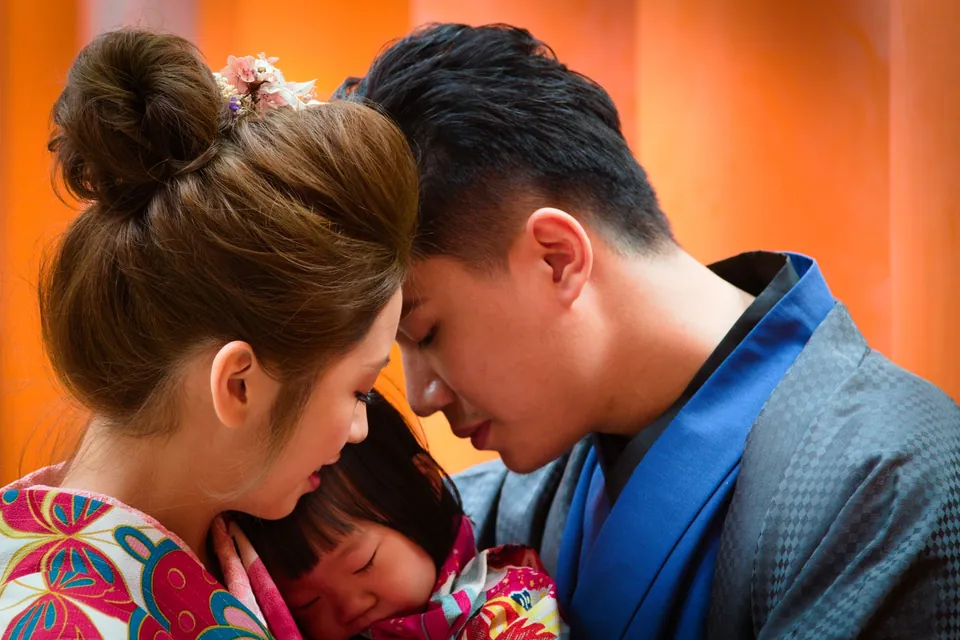
What changes when you travel Japan with children
Three things shape a family trip to Japan more than anything else. The first is walking: even with excellent trains, a day in Tokyo or Kyoto can mean 15,000 steps or more, plus a lot of station stairs. The second is the rush hour: Tokyo's trains are packed on weekday mornings, roughly 7:30am to 9:30am, which is no place for a stroller or a tired child. The third is space: hotel rooms in Japanese cities are small, and rooms for four sell out first.
None of this is a reason to worry. It just means planning one main thing a day, starting after the morning rush, and booking family rooms early.
Jet lag is the other thing to plan for if you're flying from Europe or North America. We'd keep the first full day in Tokyo light, with a park and a short outing, and expect younger children to wake very early for the first few mornings. Early starts suit Japan well, since temples and shrines are calmest before 9am.
Choosing your route and how long to go
We'd keep a family trip to Japan to two or three bases, and spend at least three nights in each. Every move means packing, checking out and carrying bags onto a train, and that takes far longer with children than without.
- One week: Tokyo (4 nights) and Kyoto (3 nights), or Tokyo alone with day trips. See our 7 days in Japan and 5 days in Tokyo.
- 10 to 14 days: Tokyo (4 or 5 nights), Kyoto (3 or 4 nights) and Osaka (2 or 3 nights). This is the route we'd suggest for most families with school-age children. Our 10 days in Japan has the day-by-day version.
- With toddlers or very young children: two bases only, Tokyo and Kyoto, with five nights or more in each and short day trips.
Why this order? Tokyo goes first because it's the easiest landing: huge, but simple to get around, with plenty of parks and easy food while everyone adjusts to the time change. Kyoto comes next for temples and gardens, with Nara as a gentle day trip. Osaka goes last because it's the most relaxed of the three, with an aquarium, Universal Studios Japan and street food, and Kansai Airport is close. Fly into Tokyo and home from Osaka so you never travel back on yourselves.
Pacing a family day in Japan
We plan each family day around one main sight in the morning, a simple lunch, and a slower afternoon. Mornings are when children have the most energy for walking and queues are shortest. After lunch, go back to your room for a rest, or head to a park, a playground or an indoor spot if it's hot or raining.
Japan's summers are hot and humid, and July and August also bring school holiday crowds. Spring and autumn are the most comfortable for families, but they're also the busiest seasons, so book rooms early.
Tokyo with children
Tokyo is a wonderful city for children, as long as you plan it neighbourhood by neighbourhood rather than crossing the city several times a day. A few ideas that work well for families:
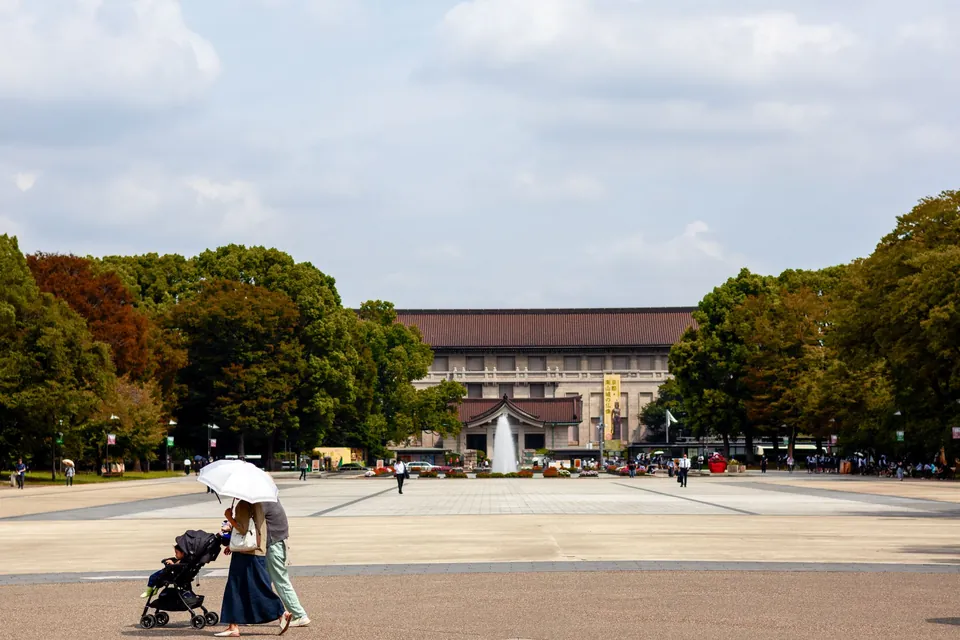
- Ueno Park and Ueno Zoo: a big, green park with museums, a pond with swan boats and the zoo. Ueno Zoo is free for children up to the end of elementary school, and adult tickets cost ¥600.
- teamLab Planets: a walk-through digital art museum where you wade through water, which most children love. Timed tickets sell out on busy days, so see when to book teamLab Planets.
- Ghibli Museum: a small, magical museum for fans of the films. Tickets only go on sale once a month for the following month, so check when Ghibli Museum tickets go on sale before you fix your dates.
- Tokyo Disney Resort: Tokyo Disneyland and Tokyo DisneySea. Children aged 3 and under enter free, and child tickets cover ages 4 to 11. Prices change by date, so see when to book Tokyo Disney Resort.
- Pokémon Café: reservations open on a set schedule and go quickly, so see when to book the Pokémon Café if your children are fans.
For a day out of the city, Kamakura, with its giant Buddha and a beach, is about an hour away and easy with children. Our 5 days in Tokyo has more day trip ideas.
Kyoto and Nara with children
Kyoto is calmer than Tokyo but busier at its famous sights, so timing matters more here. We'd go to Fushimi Inari, with its thousands of orange gates, at about 8am, when the paths are quiet and cool. The lower gates are an easy walk, and you can turn back whenever small legs have had enough rather than climbing to the top.
Arashiyama, in the west of the city, has the bamboo grove, a river with rowing boats and a monkey park on the hill, which older children tend to love. Our 3 days in Kyoto plans the city's east, west and south as separate days, which suits a family pace.
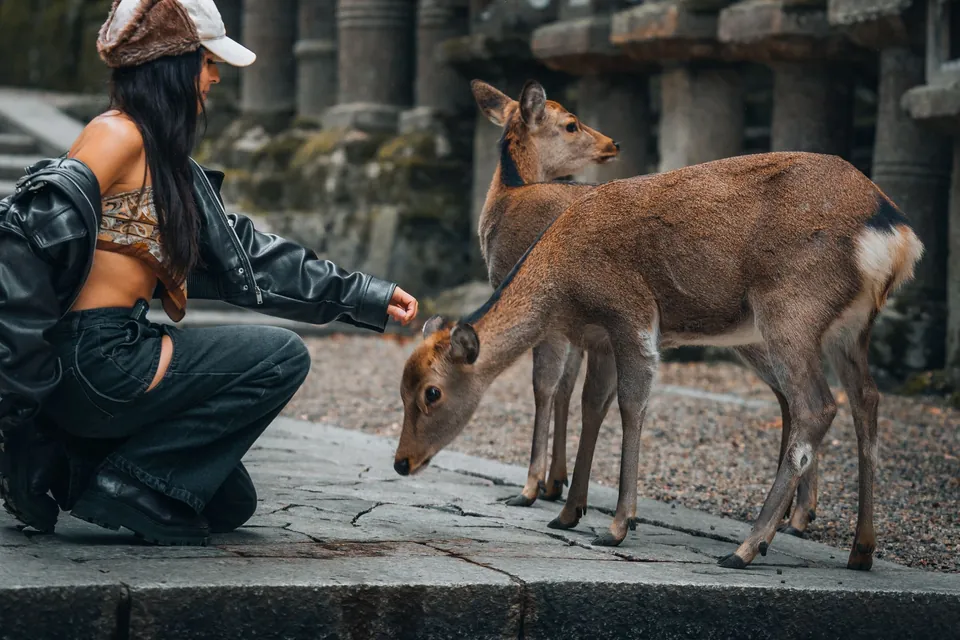
For many children, the best day of the whole trip is Nara. It's about 45 minutes from Kyoto by train, and its park is home to hundreds of deer that bow for deer crackers, sold in the park for about ¥200 a pack. The deer are wild animals, though, and they can butt, kick or bite when they want food. Nara's own guidance is to keep children close and not let them approach the deer alone. Feed one cracker at a time, and show empty hands when you've finished.
Osaka with children
Osaka is the most relaxed of the three cities, and a good place to end the trip. The Osaka Aquarium Kaiyukan, one of the biggest aquariums in Japan, is a calm, mostly indoor day that suits all ages and works well in rain or heat. In the evening, Dotonbori's lights and street food, such as takoyaki and okonomiyaki, are fun for children who like to try things.
Universal Studios Japan is the big draw for many families, especially for Super Nintendo World. Children aged 3 and under enter free, and child tickets cover ages 4 to 11. Entry to the Nintendo area can be limited on busy days, so see when to book Universal Studios Japan before you go.
Trains, child fares and luggage
Japan's trains are one of the easiest parts of a family trip. They're clean, on time and well signed in English. A few rules are worth knowing before you go:
- Child fares: on JR trains, children aged 6 to 11 pay the child fare, which is half the adult fare and reserved seat fee. Children under 6 travel free, up to two for each paying adult or child.
- Reserved seats for under-6s: a child under 6 who sits on a lap is free, but if you want them to have their own reserved seat on the shinkansen, you need to buy them a child ticket. For a long ride, a seat of their own is often worth it.
- Strollers on the shinkansen: strollers don't need the oversized baggage reservation on the Tokaido, Sanyo and Kyushu shinkansen, and can go in the racks or storage areas. If you want the space behind the last row of seats, reserve a seat with an oversized baggage area. The seat costs no extra.
- Big suitcases: on the same lines, any suitcase whose length, width and height add up to more than 160 cm needs a seat with an oversized baggage area. Without one, there's a ¥1,000 fee.
- IC cards for children: a child's Welcome Suica card charges child fares automatically. It's bought with the child's passport, and a parent can buy it for them.
Do you need a JR Pass for a family trip? Usually not for the Tokyo, Kyoto and Osaka route. A 7-day child pass costs ¥25,000 on the official site, half the adult price, and a one-way Tokyo to Kyoto Nozomi ticket with a reserved seat is about ¥14,000 for an adult and about ¥7,000 for a child. Single tickets usually come out cheaper unless you add long trips, such as Hiroshima or a return to Tokyo.
Where to stay as a family
Hotel rooms in Japanese cities are often small, and rooms for three or four are much less common than doubles. A few approaches that work well:
- Family, triple or quad rooms: book these first, since they're the first to sell out.
- Children sharing beds: many hotels let young children share their parents' bed free of charge, but the age limit varies from hotel to hotel, so check before you book.
- Japanese-style rooms: a room with tatami mats and futons on the floor is ideal for families, since there's no bed for small children to fall out of and lots of floor space to play.
- Apartments: a rented apartment gives you a kitchen and a washing machine, which helps on longer trips.
- Location: stay close to a station on a line you'll use often, so you can come back for an afternoon rest easily.
Eating out with children
Japan is easy for feeding children, including fussy eaters. Many family restaurants have children's menus and set meals made for kids, and noodles, rice balls, fried chicken and curry rice are on many menus. Convenience stores sell sandwiches, rice balls, fruit and yoghurt at all hours, which is very helpful for early risers and late arrivals.
Department store food halls, usually in the basement, are a great place to put together a picnic for the park. Big stations, department stores and shopping centres also have baby rooms for feeding and changing. Tipping is not expected in Japan.
A rough family budget per person (approximate, excluding flights)
- A family room or apartment: about ¥10,000 to ¥20,000 per person a night, sharing as a family of four, with spring, autumn and school holidays at the top of that range
- Food: about ¥4,000 to ¥8,000 a day per adult, and less for younger children
- Sights: many parks, temples and gardens are cheap or free for children, while theme parks are the big cost, with child 1-day tickets from about ¥4,700 at Tokyo Disney Resort and ¥5,500 at Universal Studios Japan
- Trains: half price for children aged 6 to 11, and free for under-6s who sit on a lap
These are our planning estimates, not quotes. Families save most by booking family rooms early and choosing which theme parks really matter, and spend most on last-minute rooms in cherry blossom season.
What to book early
- Family rooms: 3 to 6 months ahead, and earlier for cherry blossom season, autumn leaves and school holidays.
- Ghibli Museum, Pokémon Café and teamLab Planets: as soon as tickets go on sale for your dates. Our Japan booking calendar lists every opening date.
- Theme park tickets: a few weeks ahead for Tokyo Disney Resort and Universal Studios Japan, and earlier for weekends and holidays.
- Shinkansen seats: a few days ahead, or as soon as booking opens for holiday weekends, especially if you need a seat with an oversized baggage area.
Planning this trip as a family
Family trips often include grandparents, cousins or another family, and that's when planning gets complicated. We'd give each kind of booking to one person, agree on the shape of each day in advance, and keep everything in one place.
- One booker per job: one person books rooms, another books trains and timed tickets.
- A shared rhythm: agree on morning sightseeing and afternoon rest before you go, so nobody feels they're holding the group back.
- Splitting up is fine: older children and a parent can do a theme park day while the others take a slower day at a park or the aquarium.
- A shared plan: with Tripmo's group trip planner, each person's ChatGPT, Claude or Grok can add ideas to one shared plan on a map, so everyone can see each day's plans and booked times in one place.
More itineraries
- 10 days in Japan: Tokyo, Kyoto, Nara and Osaka, day by day
- 14 days in Japan: the 10-day route plus Hiroshima and the Japanese Alps
- A Japan group trip: if your next trip is with friends rather than the family
- A family trip to Italy: the same family approach for Rome, Florence and Venice
Questions
Is Japan good for a family trip?
Yes. Japan is safe, clean and very easy with children: trains run on time, convenience stores sell simple food at all hours, and big stations and department stores have baby rooms. The main things to plan around are long walking days, crowded trains at rush hour and small hotel rooms.
How many days do you need for a family trip to Japan?
About 10 to 14 days works well for a first family trip, with Tokyo, Kyoto and Osaka as three bases and at least three nights in each. With a week, we'd keep to Tokyo and Kyoto, or Tokyo alone with day trips.
Do children travel free on trains in Japan?
Children under 6 travel free on JR trains, up to two for each paying adult or child, as long as they don't take their own reserved seat. Children aged 6 to 11 pay the child fare, which is about half the adult fare.
Can you take a stroller on the shinkansen?
Yes. Strollers don't need the oversized baggage reservation on the Tokaido, Sanyo and Kyushu shinkansen, and can go in the racks or the storage areas. If you want the space behind the last row of seats, reserve a seat with an oversized baggage area.
What is the best age to take kids to Japan?
Any age works, but many parents find about 5 and up the easiest, when children can walk most of the day and enjoy theme parks, the Nara deer and the trains. Children under 4 enter Tokyo Disney Resort and Universal Studios Japan free, which helps with younger ones.