Hakone day trip from Tokyo: the loop, the pass and timings
Updated
A Hakone day trip from Tokyo is one loop: a mountain train, a cable car, a ropeway over a volcanic valley and a boat across Lake Ashi. It fits in a long day if you leave Shinjuku early, and the Hakone Freepass from Shinjuku, at 7,100 yen for adults for two days, covers the loop and the round trip from Tokyo.
This guide sets out the loop in order, what each leg costs and how long it takes, whether the Freepass is worth buying for just one day, and what to drop if the weather or the time runs short.
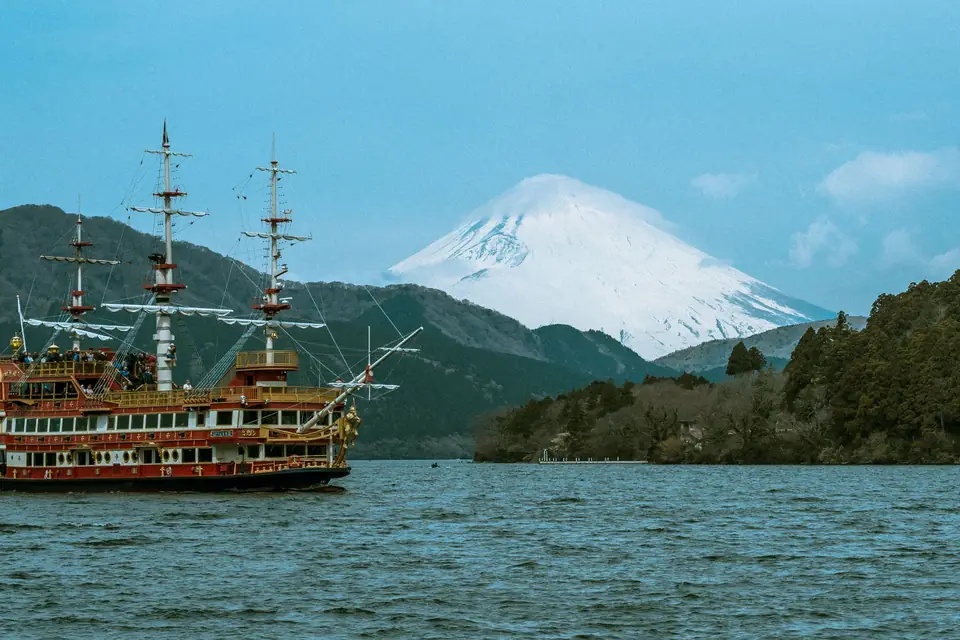
The Hakone loop at a glance
The standard loop rides uphill by train first and finishes by the water. All times are approximate:
- Shinjuku to Hakone-Yumoto: about 80 minutes on the Odakyu Romancecar, or about 2 hours on regular trains with a change at Odawara.
- Hakone-Yumoto to Gora: about 40 minutes on the Hakone Tozan train, a switchback mountain railway.
- Gora to Sounzan: about 10 minutes on the cable car.
- Sounzan to Togendai: about 30 minutes end to end on the ropeway, with a stop at Owakudani.
- Togendai to Moto-Hakone or Hakone-machi: 25 to 35 minutes on the Lake Ashi cruise.
- Moto-Hakone back to Hakone-Yumoto or Odawara: by bus, which the Freepass covers, then the train back to Shinjuku. Check the bus timetable on the day, because it is not listed here.
The loop is why the Freepass exists: six separate tickets become one. The reason to go in this direction is the ropeway and the boat both stop running in the late afternoon, so you want the long train leg first, while you are fresh, and the lake at the end.
Is a Hakone day trip from Tokyo worth it?
For most first visits, yes, with one condition: leave early. The rides inside Hakone add up to about 2 hours, plus the bus back and your stops, and Shinjuku is about 2 hours each way, so a 7:30 or 8:00 departure turns it into a full day that finishes in the early evening. Without that start, drop a leg rather than rush all of them.
If you have a spare night, an overnight stay lets you do the same loop slowly and add an onsen, since the Freepass is a 2 day pass anyway. A day trip suits you if Tokyo is your base and you only want to see the lake and the volcanic valley once.
Do you need the Hakone Freepass for one day?
There is no 1 day Freepass. The shortest pass is 2 days, at 7,100 yen for adults and 1,600 yen for children from Shinjuku, and the 3 day pass is 7,500 yen for adults and 1,850 yen for children. From Odawara the prices drop to 6,000 yen for 2 days and 6,400 yen for 3 days, but you then pay for the Odakyu train to Odawara yourself.
The pass from Shinjuku includes the round trip between Shinjuku and Odawara. Odakyu lists the regular Odawara to Shinjuku fare at 910 yen, so the round trip is about 1,820 yen, and the pass also covers eight kinds of transport in Hakone, including the Tozan train, cable car, ropeway, buses and the lake boats.
A rough check for one day, using the operators' single fares: the Odakyu round trip between Shinjuku and Odawara is about 1,820 yen, Odawara to Hakone-Yumoto is 360 yen, Hakone-Yumoto to Gora on the Tozan train is 460 yen, and the cable car to Sounzan is 430 yen. The ropeway from Sounzan to Togendai is 2,000 yen one way and the cruise from Togendai to Moto-Hakone is 1,700 yen one way. That adds up to about 6,770 yen, before the bus back from Moto-Hakone, which is not priced here.
So for one day the pass roughly breaks even against single tickets, and the bus ride tips it slightly in the pass's favour. What it adds is simplicity, one ticket instead of six, and a second day if you decide to stay. Odakyu says the pass is worth it even for a day trip. If you will never use the second day and want to pay less, single tickets cost about the same.
Tip: "2 days" on the pass means the day you buy it plus the next day until the last service, not 48 hours. A day trip uses one of the two.
Getting there from Tokyo
Start at Shinjuku. The Romancecar is the Odakyu limited express to Hakone-Yumoto and takes about 80 minutes. It needs a separate limited express ticket, which is 1,200 yen more each way for adults and 600 yen for children, and it is not covered by the Freepass. Buying the ticket online through EMot saves 50 yen.
The regular route is an Odakyu train to Odawara, then the Tozan train to Hakone-Yumoto. It is slower, but you need no seat ticket, and it works well if you would rather ride the local view. Leaving Shinjuku at about 8:00 puts you at Hakone-Yumoto by about 10:00.
On the way back, plan to be at Hakone-Yumoto or Odawara by about 17:30 to 18:00, which gets you into Shinjuku in the evening.
A day plan for the loop
- 8:00 to 10:00: Shinjuku to Hakone-Yumoto.
- 10:00 to 11:00: the Tozan train to Gora, with a quick look from the window at the gorge.
- 11:00 to 12:30: the cable car to Sounzan, then the ropeway to Owakudani. Spend 45 minutes at Owakudani.
- 12:30 to 14:00: the ropeway on to Togendai, and lunch near the port.
- 14:00 to 16:00: the cruise to Moto-Hakone, then Hakone Shrine and the lakeside.
- 16:00 to 18:00: the bus back to Hakone-Yumoto or Odawara, then the train to Shinjuku.
The plan is a guide, not a promise. Queues for the ropeway and the cruise vary through the day, and the timetable changes by season.
Hakone Shrine and the lake
Hakone Shrine was founded in 757, and its red Peace Torii stands in the water at the edge of Lake Ashi. The grounds are free and open round the clock, and the walk from the Moto-Hakone boat landing to the shrine takes about 10 to 15 minutes. It is a calm end to the day, and on clear days Mount Fuji can be seen from the lake.
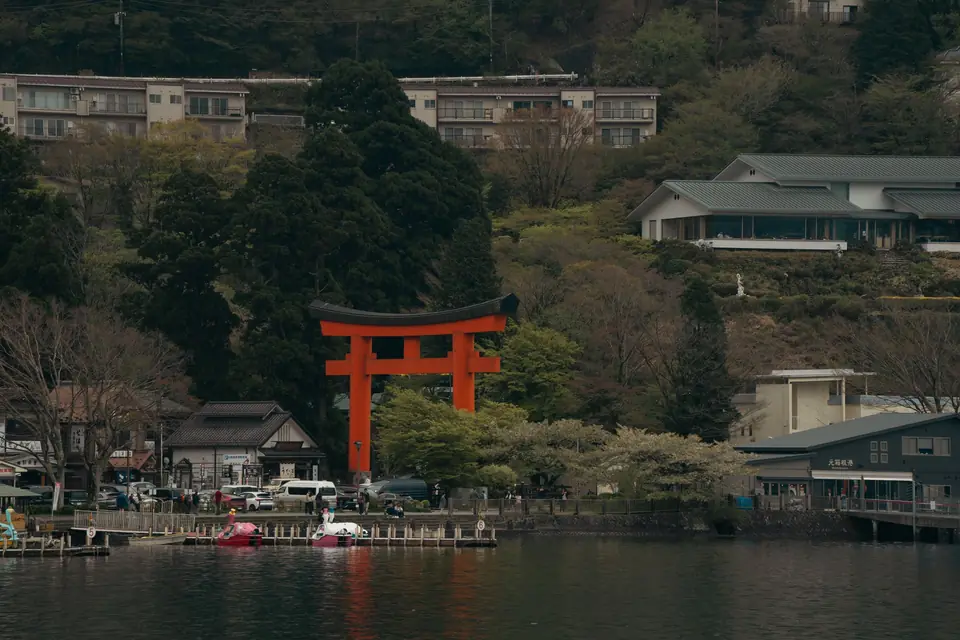
The Lake Ashi cruise runs between Togendai and Moto-Hakone or Hakone-machi in about 25 to 35 minutes. Individual fares from October 2025 are 1,700 yen one way from Togendai, or 3,000 yen round trip, and the Hakone-machi to Moto-Hakone leg is 600 yen. A special cabin is 800 yen more. The cruise timetable runs from 20 March to 30 November 2026, and a winter timetable runs from 1 December to 19 March. The last boats leave in the late afternoon, so check the time before you plan the rest of the day.
Owakudani and the ropeway
Owakudani is a volcanic valley where you can watch the volcanic activity from close up. Hakone Navi says it formed in an eruption almost 3,000 years ago, and the sulphur smell gave it the old name Jigokudani, or Hell Valley. The ropeway from Sounzan reaches it in about 10 minutes, and it runs about every minute, from 9:00 to 17:00 from February to November and from 9:00 to 16:15 from December to January. These are the published hours at the time of writing, so recheck before you go.
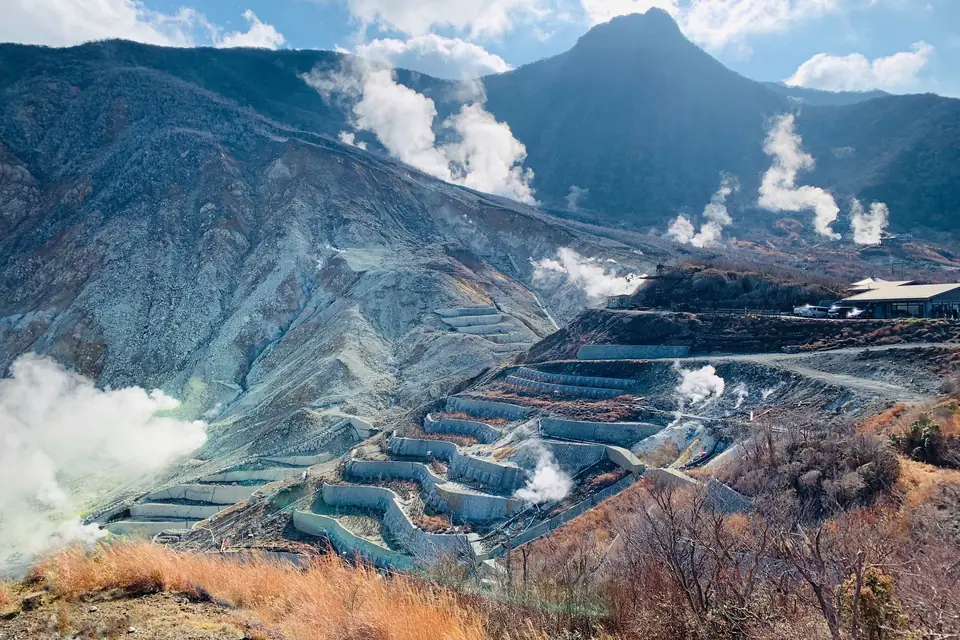
Many visitors stop here for the black eggs, sold only at the Kurotamago House. The shells turn black from the hot spring and volcanic gas, and an egg is said to add seven years to your life. Allow about 45 minutes at Owakudani.
The ropeway can stop for wind, thunder, a typhoon, maintenance or volcanic gas. If it is closed, a Tozan bus runs between Hakone-Yumoto and Togendai in about 40 minutes (approximate), so you can drop Owakudani and keep the rest of the day. The operators publish live status on the Hakone Navi status page.
If the day runs short
Pick one highlight rather than rush all of them: Owakudani for the landscape, or Hakone Shrine and the lake for the view. The simplest cut is to skip the cruise and take the bus from Togendai, or to skip Owakudani and ride the ropeway straight through.
What to book early
- Romancecar seats: the limited express needs its own ticket, so buy it online ahead for the morning you want, which also saves 50 yen on EMot.
- Hakone Freepass: buy it at Shinjuku before you board, or as a digital pass. A digital pass works on one smartphone per traveller, including children, so each person needs their own phone.
- Hakone hotels: if you want to turn the day trip into two days, book weeks ahead for the autumn leaf season and for weekends.
- Other trips from Tokyo: the 5 days in Tokyo plan and the 7 days in Japan route show where a Hakone day fits. The Japan booking guide has the dates for the tickets that sell out.
From Singapore
Japan (JST, UTC+9) is 1 hour ahead of Singapore (UTC+8) all year, and neither uses daylight saving. Non-stop flights from Singapore to Tokyo Haneda and Narita take about 7 hours, approximate, and Shinjuku is easy to reach from both.
A Singapore passport does not need a visa for a short-term stay of up to 90 days, for sightseeing, visiting friends or business meetings, and not for paid work. Japan enacted a law on 29 May 2026 (promulgated 5 June 2026, Act No. 32 of 2026) creating JESTA, an online travel authorisation for visa-exempt visitors. It starts on a date set by Cabinet Order, no later than 31 March 2029. Nothing new is needed yet.
For a Singapore long weekend, see the Singapore public holidays 2027 page. Hakone is easiest as a single day inside a longer Tokyo stay, rather than a trip of its own.
Planning this trip as a group
- One person buys the passes. The paper pass is for one person each, so the buyer can collect them at Shinjuku in one go, and the digital pass needs one phone per traveller.
- Agree where to stop. A group of mixed ages may skip the shrine or Owakudani, and that is fine. Pick the one stop everyone wants and let the rest be optional.
- Set a meeting time and place. If you split at Owakudani, agree a time and a place at Togendai or Moto-Hakone.
- Keep the plan in one place. With Tripmo's group trip planner, each person's ChatGPT, Claude or Grok adds to one shared plan on a map, so tickets and timings don't get lost in the group chat.
More Japan itineraries
- 5 days in Tokyo: neighbourhood days, with a day trip option
- 7 days in Japan: Tokyo, Kyoto and Osaka in one week
- Kyoto vs Osaka: where to stay and how to split your days
- All Japan itineraries
Sources
- Odakyu, Hakone Freepass: 2 day pass from Shinjuku at 7,100 yen for adults and 1,600 yen for children, 3 day pass at 7,500 yen and 1,850 yen, from Odawara 6,000 yen and 6,400 yen, the Shinjuku to Odawara round trip included, eight kinds of transport, the 2 day validity rule, one digital pass per smartphone, and the Romancecar upgrade at 1,200 yen. Updated 3 November 2026.
- Odakyu Electric Railway, Hakone Freepass: the regular Odawara to Shinjuku fare of 910 yen and the pass terms. Updated 3 November 2026.
- Hakone Navi, Tozan train and cable car (Japanese): Hakone-Yumoto to Gora 8.9 km in about 40 minutes, the cable car about 10 minutes, and the fare table, with Odawara to Hakone-Yumoto at 360 yen, Hakone-Yumoto to Gora at 460 yen and Gora to Sounzan at 430 yen. The operator's table is dated 1 October 2022, so the fares are approximate.
- Odakyu Hakone, fare amendments from October 2025 (PDF): ropeway 2,000 yen one way and 3,000 yen round trip, cruise 1,700 yen one way and 3,000 yen round trip, Hakonemachi to Motohakone 600 yen, and the Freepass from Odawara at 6,000 yen and 6,400 yen.
- Hakone Navi, Hakone Kankosen (Lake Ashi cruise): the 2026 timetable period from 20 March to 30 November, the winter timetable from 1 December to 19 March, and the special cabin at 800 yen more.
- Hakone Ropeway: operating hours of 9:00 to 17:00 from February to November and 9:00 to 16:15 from December to January, and suspensions for wind, thunder, typhoon, maintenance or volcanic gas. Ride times differ between official pages, so the 30 minutes for the full route is approximate.
- Hakone Navi, Hakone Ropeway: the route from Sounzan through Owakudani to Togendai.
- Hakone Navi, Owakudani: the eruption almost 3,000 years ago, the name Jigokudani, the black eggs, about 10 minutes by ropeway from Sounzan, and the view of Mount Fuji from the ropeway.
- Hakone Navi, Kurotamago House: the black eggs sold only at Kurotamago House and the seven years saying.
- Hakone Navi, service status: live operating status for the ropeway, trains and cruise.
- Japan National Tourism Organization, Hakone Shrine: the shrine founded in 757 and the Peace Torii.
- Ministry of Foreign Affairs of Japan, Exemption of Visa (Short-Term Stay): Singapore is listed, for 90 days.
- Immigration Services Agency of Japan: the law enacted on 29 May 2026 creating JESTA, starting no later than 31 March 2029.
- Flights and times in Tokyo: published schedules, approximate and subject to change. No fares.
Questions
Is a day trip to Hakone from Tokyo worth it?
Yes, if you start early. The full loop by Tozan train, cable car, ropeway and boat is about 2 hours of riding inside Hakone, plus the bus back and your stops, and you need about 2 hours each way from Shinjuku. Odakyu itself says the Freepass is worth it even for a day trip.
Is there a one day Hakone Freepass?
No. The Hakone Freepass from Shinjuku is a 2 day pass at 7,100 yen for adults, or a 3 day pass at 7,500 yen. A 2 day pass covers the day you buy it and the next day until the last service.
How long does it take to get from Tokyo to Hakone?
The Romancecar limited express from Shinjuku takes about 80 minutes to Hakone-Yumoto. The regular Odakyu Line with a change at Odawara is slower, so allow about 2 hours.
What is the best order for the Hakone loop?
The usual order is Hakone-Yumoto, the Tozan train to Gora, the cable car to Sounzan, the ropeway over Owakudani to Togendai, the boat across Lake Ashi, then a bus back. The ropeway and the boat both finish in the late afternoon, so start the loop by about 10:00.
Can you see Mount Fuji from Hakone?
On clear days, from the ropeway and from the lake. Clouds are common, so treat Fuji as a bonus. The volcanic valley at Owakudani is worth the ride whatever the weather.
What happens if the Hakone ropeway is closed?
The ropeway can stop for wind, thunder, a typhoon, maintenance or volcanic gas. Check the operator's status page on the morning, and if it is closed, take the Tozan bus between Hakone-Yumoto and the lake instead.
Plan this trip together.
Start a trip in Tripmo, send your friends its link, and everyone adds to the plan with their own AI.
Start planning