A family trip to Italy: an easy plan for parents and kids
Updated
A family trip to Italy is easier than many parents expect. Children are welcome in restaurants, piazzas are made for running around while the adults sit with a coffee, and there's always pizza, pasta or gelato for the child who doesn't want anything new. The cities are old and compact, so a lot of the best moments happen on foot, between the famous sights rather than inside them.
This guide covers what changes when you travel Italy with children: a route that keeps hotel changes low, how to pace a day around naps and late dinners, which sights work for which ages, family train fares, and what to book early. For the full day-by-day plans, we point you to our 7-day and 10-day Italy itineraries, which both work for families with the changes we describe below.
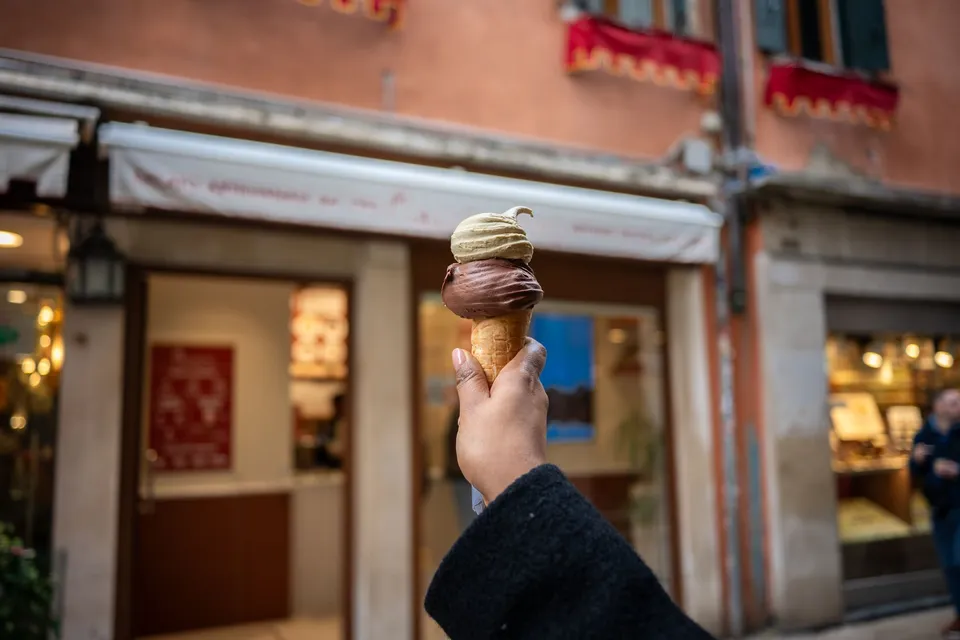
What changes when you travel Italy with children
Three things shape a family trip to Italy more than anything else. The first is walking: historic centres are cobbled, hilly in places and often closed to cars, so even short distances add up for small legs. The second is the clock: many restaurants don't open for dinner until about 7:30pm, and in summer the early afternoon is hot enough that locals stay indoors. The third is tickets: the big sights use timed entry, and a family that turns up late for its slot may not get in.
None of this is a reason to worry. It just means planning one main thing a day, building in a proper afternoon break, and booking the few timed tickets that matter before you go.
Choosing your route and how long to go
We'd keep a family trip to two or three bases, and spend at least three nights in each. Every move means packing, checking out and carrying bags, car seats or a buggy onto a train, and that takes far longer with children than without.
- One week: Rome and Florence, with a day trip in between. See our 7 days in Italy.
- Ten days or more: Rome (4 nights), Florence (3 nights) and Venice (3 nights). This is the route we'd suggest for most families with school-age children. Our 10 days in Italy has the day-by-day version.
- With toddlers or very young children: two bases only, Rome and Florence, with four or five nights in each and shorter day trips.
Why this order? Rome is the most demanding city, with the busiest sights and the most walking, so it goes first while everyone is fresh. Florence is smaller and calmer, and it's an easy base for a day in the Tuscan countryside. Venice comes last because it has no cars at all, which makes it one of the most relaxing cities in Europe for children once you're there. Fly into Rome and home from Venice so you never travel back on yourselves.
Pacing a family day in Italy
We plan each family day around one main sight in the morning, a long lunch, and a slow afternoon. Mornings are cooler and queues are shorter, and children have the most patience for a museum before lunch. After lunch, go back to your room for a rest, or find a park or a shady piazza where the children can play.
The early evening is often the best part of the day. Many Italian families take a slow walk, the passeggiata, before dinner, and the squares fill up with children on scooters and grandparents on benches. It's a lovely time to join in, and it fills the gap before the restaurants open.
Rome with children
Rome rewards a light touch with children. Rather than trying to see everything, we'd pick a few things that tell a good story and leave room for gelato and fountains in between.
- The Colosseum, the Roman Forum and the Palatine: most children find the Colosseum the most exciting sight in Italy. Visitors under 18 enter free, but they still need their own ticket booked online, and the Colosseum ticket is timed and named. Tickets open about 30 days before each date, so book as soon as you can.
- The Pantheon: a short visit that impresses all ages, with that huge hole in the roof. It also uses timed tickets, and under-18s are free.
- The Trevi Fountain: throwing a coin in is a classic for children. Entry to the area by the basin costs a small fee during the day, but children under 6 are free, and the square above is free for everyone.
- The Vatican Museums: wonderful, but long and crowded. Children under 7 enter free and those aged 7 to 18 pay a reduced ticket. With younger children, we'd go at opening time and head fairly directly to the Sistine Chapel rather than trying to see every room.
- Villa Borghese: Rome's big central park, with space to run, bikes to hire and shade on hot afternoons. It's our favourite answer to "can we just play now?"
Florence and Tuscany with children
Florence is compact, mostly flat in the centre and easy to cover on foot, which makes it a good second base for families. The Uffizi is free for visitors under 18 with ID, and children under 12 must be with an adult. We'd book an early slot and keep the visit to about an hour and a half, focusing on a few paintings the children have chosen from the postcards in advance.
Climbing Brunelleschi's dome is a highlight for older children who like a challenge, but it's 463 steps with no lift, and the slot you book is fixed. With younger children, the walk up to Piazzale Michelangelo for the view over the rooftops is a gentler alternative. The Boboli Gardens, behind the Pitti Palace, give everyone room to roam on a hot day.
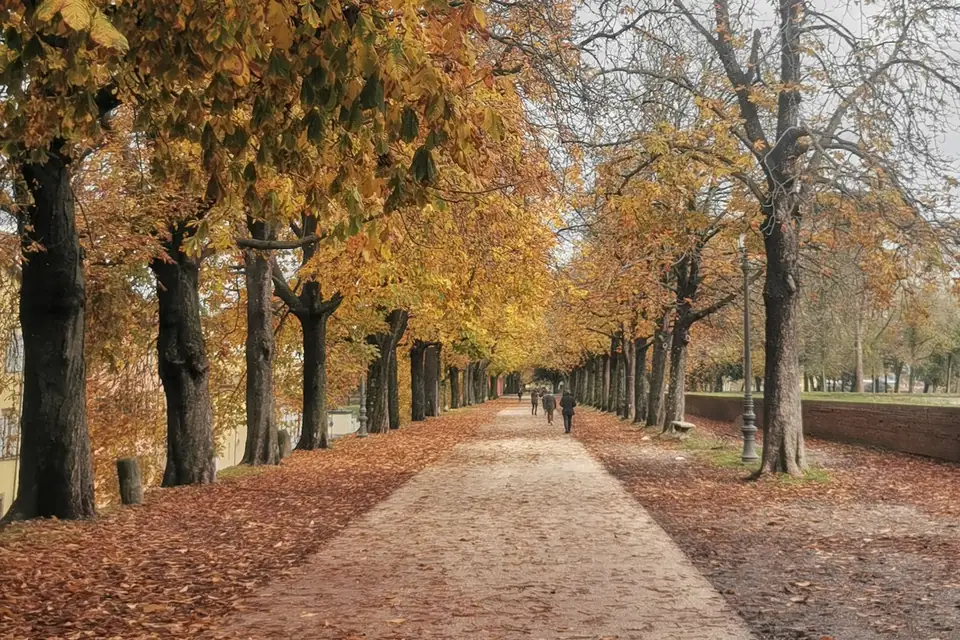
For a day out, we'd suggest Lucca, about an hour and 20 minutes by direct regional train. Its old city walls are topped by a wide, tree-lined path of roughly 4 km that's ideal for hiring bikes as a family, with no cars and plenty of places to stop. Pisa is on the same line if your children want to see the Leaning Tower, but note that children under 8 can't climb it, judged by the year they turn 8, and under-18s must be with an adult. Seeing it from the lawn is often enough.
Venice with children
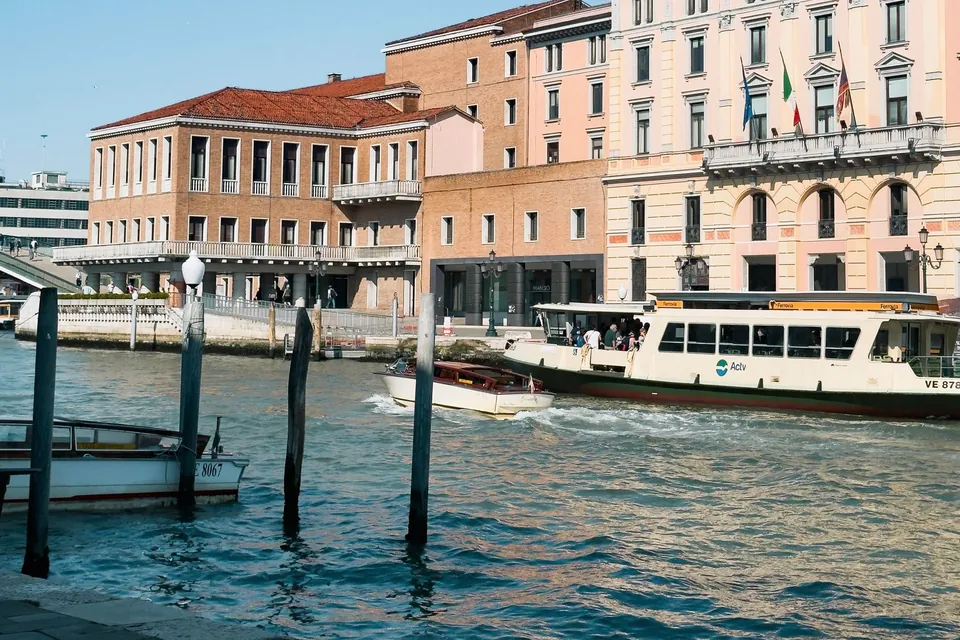
Venice is a city of boats, which is usually all the persuading children need. There are no cars, so once you're away from the busiest streets they can walk a little ahead without you worrying about traffic. Riding the vaporetto, the water bus, down the Grand Canal is a sightseeing tour in itself, and children under 6 travel free on ACTV's water buses in Venice.
The one real challenge is bridges. Most of the canals are crossed by stepped bridges, so a heavy buggy has to be carried up and down many times a day. We'd bring a light folding stroller or a baby carrier instead. Folded strollers travel free on the vaporetto, and an open one is only allowed when the boat isn't crowded.
We'd give Venice three nights on a family trip, rather than two, so you can have one slow day with no plan at all. A morning on the lagoon islands, an afternoon on the beach at the Lido in summer, or simply getting lost among the quiet canals of Castello all work well with children.
Trains and getting around as a family
Italy's fast trains are one of the easiest parts of a family trip. Seats are reserved, there's room for bags, and the journeys between the main cities take a couple of hours or less. Both train companies have family fares that can save a lot, as long as you book ahead.
- Trenitalia FrecciaFAMILY: on Frecciarossa, Frecciargento and Frecciabianca trains, children under 15 travel free and adults pay half the Base fare. It's for groups of 2 to 5 people with at least one adult and one child under 15, and it must be booked by midnight on the fifteenth day before departure. Seats at this fare are limited.
- Italo Famiglia: children under 14 travel free and adults get 50% off the Flex fare, for groups of 2 to 4 people with at least one adult. It's also sold until 15 days before departure, it isn't refundable, and it doesn't apply on a few short routes such as Bologna to Florence.
- Babies and toddlers: on Trenitalia's fast trains, children under 4 travel free if they sit on a lap. On Italo, under-3s travel free on a lap.
- From Rome's airport: on the Leonardo Express to Roma Termini, children under 4 travel free, and one child aged 4 to 11 travels free with each paying adult.
Book everyone on the same booking so your seats come out together, and ask for a table of four if the booking site offers it. Inside the cities, you'll mostly walk, with the odd taxi or metro ride on tired days.
Do you need a car? Not for Rome, Florence or Venice, where a car is more trouble than help and historic centres have restricted traffic zones. A car only makes sense if you add a few slow days in the countryside, such as a farm stay in Tuscany. If you hire one, ask the rental company for the right child seats when you book.
Where to stay as a family
Rooms in Italy's historic centres are often small, and rooms for four are less common than doubles, so family rooms are the first thing to sell out. A few approaches that work well:
- Family or connecting rooms: ask the hotel directly, since the best family rooms aren't always shown online.
- Apartments: a rented apartment gives you a kitchen for easy breakfasts, a washing machine, and a living room for the evenings after the children are asleep.
- Location over size: stay within walking distance of the main sights, so you can go back for an afternoon rest without a long trip each way.
- Lifts: older buildings don't always have one. If you're carrying a buggy or have small children, check before you book.
Eating out with children
Italy is one of the easiest countries in the world to feed children. Pasta with tomato sauce or simply butter and parmesan, pizza margherita and grilled chicken are on most menus, and many restaurants will happily make a smaller portion if you ask. Gelato is the daily reward, and a good gelateria lets children taste a flavour before choosing.
Lunch is a good time for the family's main meal out, since restaurants are more relaxed and children are less tired. You'll often see a small cover charge per person on the bill, called the coperto, which is normal. Tipping is not expected in Italy, though rounding up for good service is always welcome.
A rough family budget per person (approximate, excluding flights)
- A family room or apartment: about €45 to €100 per person a night, sharing as a family of four, with Venice and summer at the top of that range
- Food: about €35 to €60 a day per adult, and less for younger children
- Sights: low for children, since most state museums and sites are free for under-18s, plus timed tickets for adults and a reduced Vatican ticket for children aged 7 to 18
- Trains: much lower per person if you book family fares at least 15 days ahead
These are our planning estimates, not quotes. Families save most by booking family train fares early and taking an apartment with a kitchen, and spend most on last-minute rooms in July and August.
What to book early
- Family rooms and apartments: 3 to 6 months ahead, and earlier for school holidays, Easter and the summer.
- Train tickets: at least 15 days ahead if you want the family fares, and earlier for busy holiday weekends.
- The Colosseum: as soon as tickets open, about 30 days before your date, including the free tickets for children.
- The Vatican Museums, the Uffizi and the Duomo climb: a few weeks ahead in spring and summer, and choose morning slots.
- Any guided visit for children: family tours and workshops are small and fill quickly.
Planning this trip as a family
Family trips often include grandparents, cousins or another family, and that's when planning gets complicated. We'd give each kind of booking to one person, agree on the shape of each day in advance, and keep everything in one place.
- One booker per job: one person books rooms, another books trains and timed tickets.
- A shared rhythm: agree on morning sightseeing and afternoon rest before you go, so nobody feels they're holding the group back.
- Splitting up is fine: older children and a parent can climb the dome while the others have a gelato in the square below.
- A shared plan: with Tripmo's group trip planner, each person's ChatGPT, Claude or Grok can add ideas to one shared plan on a map, so everyone can see each day's plans and booked times in one place.
More itineraries
- 7 days in Italy: Rome and Florence, with a food day in Bologna
- 10 days in Italy: Rome, Florence, a Tuscany day trip and Venice
- A Japan group trip: if your next trip is with friends rather than the family
Questions
Is Italy good for a family trip?
Yes. Children are welcome almost everywhere, the food is easy for fussy eaters, fast trains link the main cities, and most state museums and archaeological sites are free for under-18s. The main things to plan around are summer heat, late dinners and a lot of walking.
What is the best Italy itinerary for a family?
For a first family trip, Rome for 4 nights, Florence for 3 and Venice for 3 works well, flying into Rome and home from Venice. With children under about six, we'd keep it to two bases, Rome and Florence, and add day trips instead.
Do children travel free on trains in Italy?
Often, yes. Trenitalia's FrecciaFAMILY offer lets children under 15 travel free on Frecce trains with adults at half the Base fare, and Italo Famiglia does the same for under-14s, if you book at least 15 days ahead and seats are still available.
Are museums free for children in Italy?
Italian state museums and sites, including the Colosseum, the Pantheon and the Uffizi, are free for visitors under 18, though you still need to book their timed tickets. The Vatican Museums are free under 7 and reduced from 7 to 18.
When is the best time for a family trip to Italy?
Late spring and early autumn are the most comfortable, with milder heat and shorter queues. If school holidays mean July or August, plan your sightseeing for the mornings and keep the afternoons for rest, shade or a swim.