A Japan group trip with friends: how to plan it so everyone enjoys it
A Japan group trip with friends can be one of the best trips you ever take together. The trains are easy, the food suits every taste, and the cities are big enough that six people with six different ideas of a good day can all find theirs. The hard part is rarely Japan itself. It's the logistics of moving several people, several suitcases and several opinions through a country that runs on reservations and punctual trains.
This guide covers the parts that change when you travel as a group: how to split rooms, how to sit together on the shinkansen, how to split up and meet again without stress, how to pace the days for mixed interests and how to share costs fairly. For the day-by-day routes, we point you to our 7, 10 and 14-day Japan itineraries, which all work for groups with the changes we describe below.
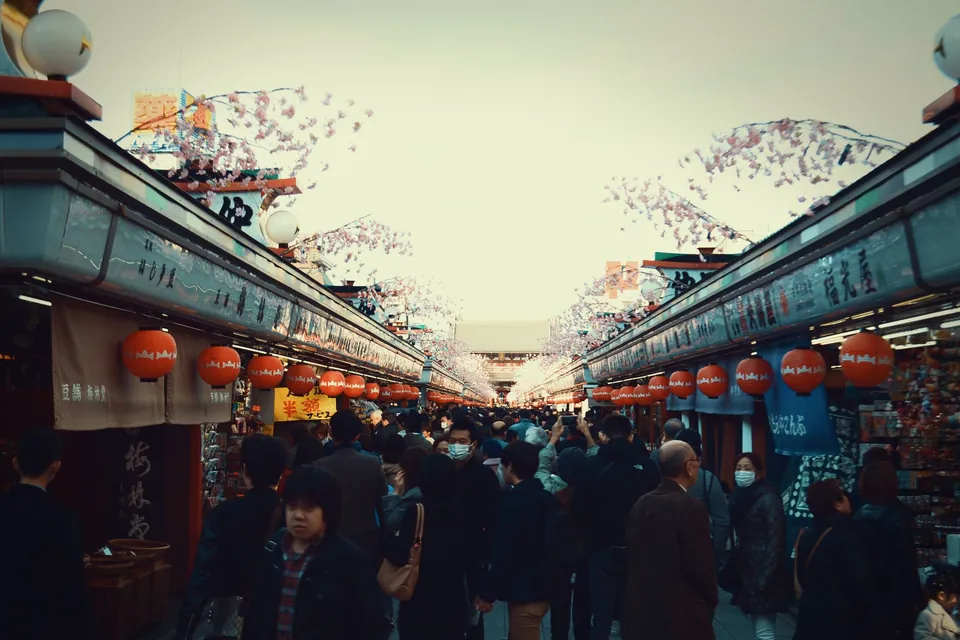
What changes when you travel Japan as a group
Most of Japan is easy for groups, but a few things behave differently. Hotel rooms are small, and rooms for three or more are less common than twins, so room splits need planning. Popular restaurants are often small too, and a walk-in table for six is far harder to find than a counter seat for two. And because trains leave exactly on time, a group that runs five minutes late misses its train rather than catching it at a run.
None of this is a reason to worry. It just means a group trip to Japan rewards a little more planning up front: who books what, where you'll meet, and which parts of each day you'll spend together.
Choosing your route and how long to go
The classic first-timer routes suit groups well, because the cities offer enough variety that nobody spends a day doing something they don't care about.
- One week: Tokyo and Kyoto, with a last night in Osaka. See our 7 days in Japan.
- Ten days: Tokyo, Hakone, Kyoto and Osaka. This is the route we'd suggest for most groups. See our 10 days in Japan.
- Two weeks: add Kanazawa, Hiroshima and Miyajima. See our 14 days in Japan.
- A short city break together: one base and no hotel changes. See 5 days in Tokyo or 3 days in Kyoto.
Why fewer bases for a group? Every hotel change means packing, checking out, moving everyone's bags and checking in again, and that takes longer with more people. We'd aim for no more than one move every three nights, and we'd rather drop a city than rush the group through it.
Where to stay: room splits that work
Room planning is the first real group decision, and it's worth settling before anyone books flights.
- Hotels: twin rooms are the easy default, so groups of four or six often split into pairs. Rooms for three exist but are rarer, and many Japanese hotels price per person rather than per room, so check the total for your whole group, not just the headline rate.
- Apartments: a rented apartment gives everyone one shared living space and a table to meet around, which matters more than it sounds on a long trip. In Japan, a legal short-term rental must be registered, and the registration number is shown on a sign at the entrance and usually in the listing. If a listing has no number, we'd book elsewhere.
- Ryokan (traditional inns): Japanese-style rooms with futons on tatami can often sleep four or more people in one room, which makes a ryokan night a lovely group splurge. Prices are usually per person and often include dinner and breakfast.
- Mixed groups: couples and singles don't have to stay the same way. It's fine for a couple to take a private room while the others share an apartment nearby.
For bases, stay close to a major station. In Tokyo that might be Shinjuku, Ueno or Tokyo Station, in Kyoto the area around Kyoto Station or Shijo, and in Osaka Namba or Umeda. Being near the trains makes it easier for the group to split up during the day and get back on its own.
Splitting up and regrouping
The most useful habit for a group trip is not doing everything together. Groups that try to stay as one block all day tend to move at the pace of the slowest decision, and someone always ends up waiting outside a shop they didn't want to visit.
We plan most group days around two anchors: a shared morning or breakfast, and a shared dinner. Between them, the group can split into twos and threes by interest and meet again in the evening. A few examples of how that works in each city:
- Tokyo: one group spends the afternoon in Akihabara's game and anime shops, another at a museum in Ueno, and a third shopping in Harajuku. Everyone meets in Shinjuku or Shibuya for dinner.
- Kyoto: early risers go to Fushimi Inari at sunrise, the rest join later at the Higashiyama lanes. In the afternoon, some take the short train to Nara while others stay for a tea ceremony or a quiet garden.
- Osaka: a free afternoon works well before a shared evening along Dotonbori, where there's food for every taste in a few streets.
A few small things make splitting up painless. Agree on a meeting point that's easy to find, such as a named station exit rather than "the station". Make sure everyone has their own transit card and mobile data, so nobody depends on someone else to get home. And share your plans for the afternoon in the group chat, even if nobody asks.
Pacing the days for mixed interests
Every group has a mix: someone who wants three temples before lunch, someone who mainly wants to eat, and someone who'd happily spend a day in an onsen. Rather than finding a middle that suits nobody, we'd give each person one day or half-day that's built around what they care about most, and ask the others to join with good grace or split off for it.
Keep the shared parts of the day slower than you would alone. With six people, a coffee stop, a toilet stop and a convenience store run take twice as long as you'd expect, so plan three things a day rather than five. It's a small change that keeps the mood good into the second week.
Booking seats together on the shinkansen
On a group trip, sitting together on the bullet train is half the fun, with snacks, a station bento and a few hours to talk. Seats are reserved, so the simplest approach is for one person to book everyone in the same booking.
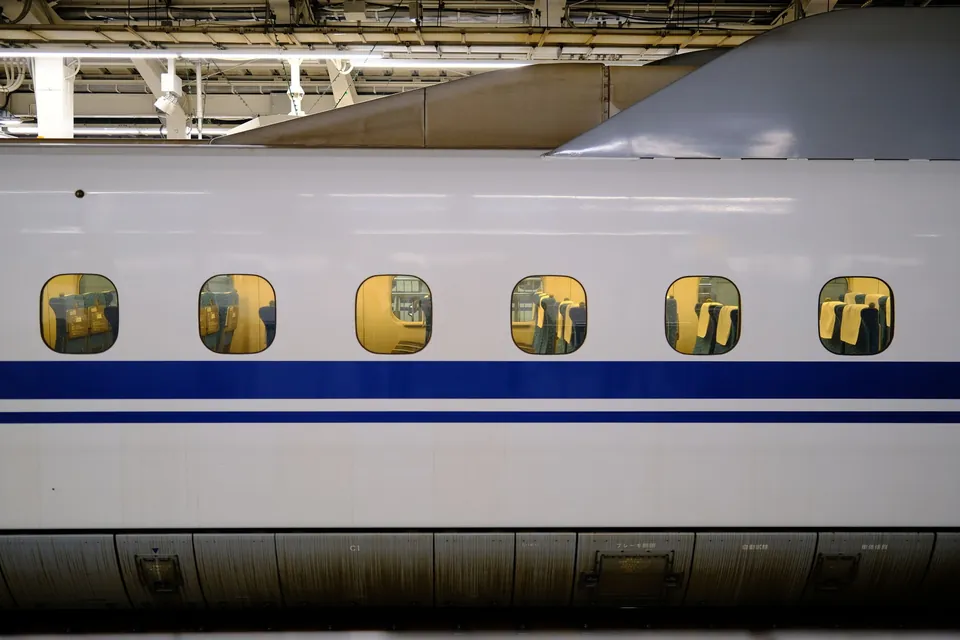
- Book together: on the Tokaido Shinkansen (Tokyo, Kyoto and Osaka), smartEX, the official online booking service, takes one to six passengers in a single booking. For a bigger group, make two bookings for the same train straight after each other and check the seat map.
- Choose the right rows: ordinary cars usually have rows of three seats and two seats either side of the aisle, and the seats can be turned to face each other. A group of four can take two pairs of two-seat rows, one behind the other, and turn one row around. A group of six can do the same with two rows of three.
- Large suitcases: bags whose length, width and height add up to 161 to 250 cm need a seat with an oversized baggage area, reserved in advance at no extra charge. On smartEX these seats are booked one person at a time, so if several of you have big cases, book them first.
- Book ahead in busy seasons: smartEX lets you reserve some trains up to a year ahead, with the exact train and seat numbers confirmed about a month before travel. In cherry blossom season, autumn leaves and the Golden Week and New Year holidays, we'd book as soon as your dates are firm.
Getting around as a group
The trains are as easy for groups as for anyone else, but a few details help.
- One transit card each: everyone should have their own Suica or PASMO, either on their phone or as a physical card, so the group can pass through ticket gates quickly and split up whenever it likes.
- Taxis: most standard taxis take up to four passengers (approximate; larger vehicles exist but are fewer). For five or six people, plan on two taxis or a pre-booked larger car. Shared between four, a short taxi ride can cost about the same per person as the train, which is useful late at night or in the rain.
- Send your bags ahead: hotel front desks can forward luggage to your next hotel, usually arriving the next day. For a group with several suitcases, this is one of the biggest comforts of the trip, especially on the day you move from Tokyo to Hakone or Kyoto.
- Data: one pocket Wi-Fi only works while the group stays together, so we'd give everyone their own eSIM instead.
Eating together, and paying without awkwardness
Shared dinners are the heart of most group trips, and they're the part that needs the most planning in Japan.
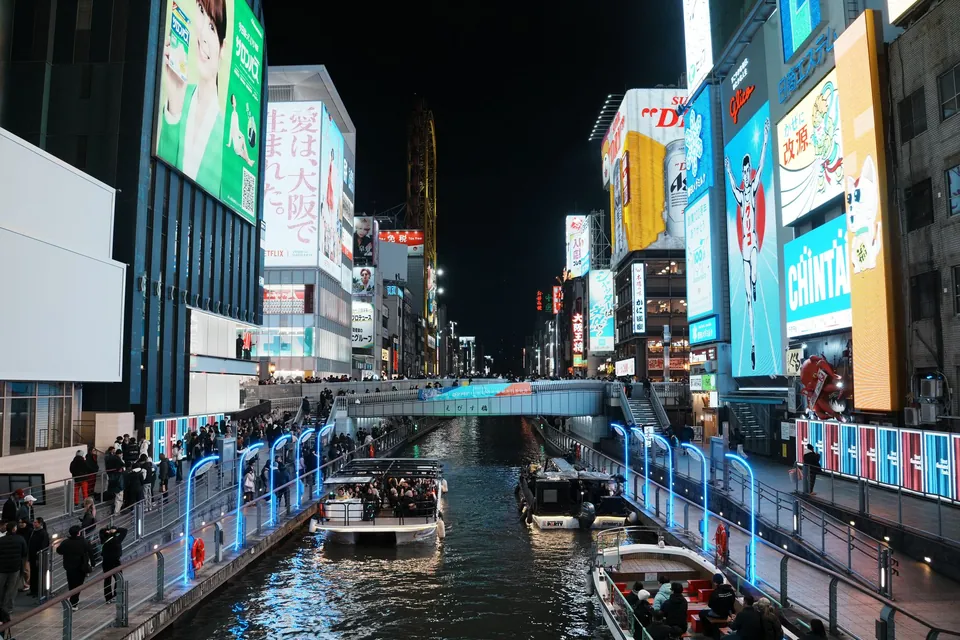
- Book dinners for six or more: many popular restaurants are small, so a reservation is often the difference between eating together and splitting across three places. Some restaurants charge for cancellations or no-shows, so keep the numbers accurate.
- Izakaya course menus: many Japanese pubs offer set courses for groups, often with an all-you-can-drink option for a fixed time. They're an easy, relaxed way to feed a big table without anyone ordering for everyone.
- Private rooms: some restaurants have private rooms, called koshitsu, which are quieter for a group and worth asking for when you book.
- Paying: many restaurants prefer one bill per table, so it's easiest for one person to pay and the others to pay them back. Tipping isn't expected in Japan.
- Lighter meals: convenience stores, food halls and ramen counters are perfect for the parts of the day when the group has split up, and they keep the shared dinner feeling like an occasion.
Onsen and baths as a group
A hot spring is one of the nicest things to do together, but public baths in Japan are usually separated by gender and you bathe without swimwear, so a mixed group will split up for this part. Many onsen also restrict guests with tattoos. If either of those matters to your group, look for a ryokan with private baths that can be booked by the hour, often called kashikiri baths, or a room with its own bath. They let friends, couples and mixed groups bathe together in private.
A rough group budget per person (approximate, excluding flights)
- Shared hotel twin or apartment: about ¥8,000 to 18,000 per person a night, more in Kyoto during peak seasons
- A ryokan night with dinner and breakfast: about ¥20,000 to 45,000 per person
- Food: about ¥4,000 to 9,000 a day, with izakaya course dinners at the upper end
- Transport and sights: follow the per-person estimates on the 7, 10 or 14-day pages
These are our planning estimates, not quotes. Groups save most on apartments and shared taxis, and spend most when dinners become long, multi-course evenings every night, so we'd plan a mix of both.
What to book early
- Group rooms and apartments: 3 to 6 months ahead, more in cherry blossom season (late March to early April) and autumn leaves (mid-November to early December). Places that sleep six or more go first.
- A ryokan for the group: as soon as your dates are set, since Japanese-style rooms for four or more are limited.
- Shinkansen seats: as soon as your dates are firm, especially for large suitcases and busy holiday periods.
- Timed tickets: popular attractions such as observation decks and digital art museums sell timed entry, so one person should book everyone's slot together.
- Shared dinners: a week or more ahead for groups of six or more, and longer for well-known restaurants.
Keeping everyone on the same page
Most group trip stress comes from decisions, not travel. We'd give each kind of booking to one person, set a date for each decision, and keep everything in one place rather than scattered across messages.
- One booker per job: one person for rooms, one for trains, one for dinners. Everyone else agrees in advance to go with their choice.
- Deadlines: decide when rooms and trains must be booked, and stick to it, since good group options sell out first.
- A shared plan: with Tripmo's group trip planner, each person's ChatGPT, Claude or Grok can add ideas to one shared plan on a map, so the group can see every day's anchors and free time without scrolling back through the group chat.
More Japan itineraries
- 10 days in Japan: our classic first-timer route, and the one we'd suggest for most groups
- 7 days in Japan: Tokyo, Kyoto and Osaka in one week
- 14 days in Japan: add Kanazawa, Hiroshima and Miyajima
- A solo trip to Japan: for the part of the trip before or after the group
- 5 days in Tokyo: one base, neighbourhood days and a day trip
- 3 days in Kyoto: temples, Arashiyama and an early Fushimi Inari
Questions
How do you plan a Japan group trip?
Agree on dates, budget and a rough route first, then give each booking to one person: rooms, train seats and timed tickets. Plan a shared anchor each day, such as breakfast or dinner, and let the group split up in between.
What is the best Japan itinerary for a group of friends?
For a first trip, Tokyo, Hakone, Kyoto and Osaka over about ten days works well for most groups. It has enough variety for mixed interests and only four hotel changes.
How can a group sit together on the shinkansen?
Reserve seats in one booking so they come out side by side. On the Tokaido Shinkansen, smartEX takes up to six passengers per booking, and ordinary-car seats come in rows of three and two that can be turned to face each other.
Is travelling to Japan as a group cheaper per person?
Usually a little. Shared apartments, Japanese-style rooms and shared taxis bring the cost per person down, but many hotels and ryokan price per person, so the savings are smaller than in some countries.
How should friends split costs on a trip to Japan?
Keep one shared expense log and settle up every few days rather than at every meal. Many restaurants prefer one bill per table, so it's easiest for one person to pay and the others to pay them back.