Ramen Nagi Tokyo: the Golden Gai original, how to order and when to go
Updated
Ramen Nagi's original shop, up a steep stair in Shinjuku's Golden Gai, is a 10 seat niboshi ramen counter that is open 24 hours. A regular bowl is about 1,500 yen (October 2026). You buy a ticket at the machine at the top of the stairs, hand it over at your seat, and the broth tastes like the dried sardines it is made from.
Niboshi are dried baby sardines, and Nagi built its name on a broth that tastes of little else. The first sip is salty, and the room smells of fish. If you like strong flavours, this is the shop for it. If you want a mild ramen, pick another one. Nagi began here in Golden Gai in 2004, according to the company, in a space of about four tsubo with eight seats.
What to order
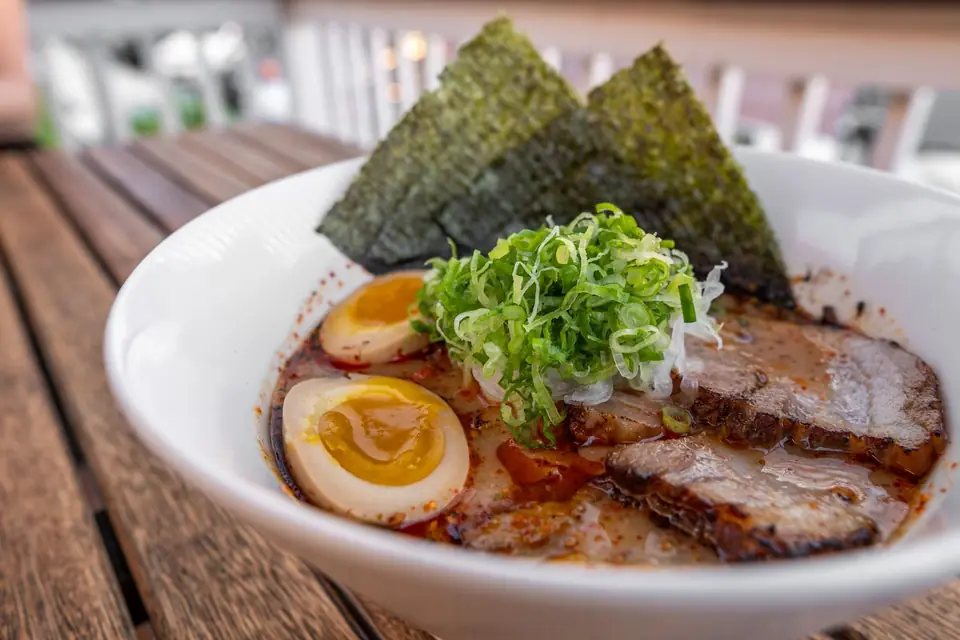
The regular bowl is Sugoi Niboshi Ramen ("amazing niboshi ramen"). The broth blends more than 20 kinds of dried sardine, with over 60 grams in every bowl, and the sardines are cleaned by hand. Two noodles come in the bowl: a wavy, medium-thick noodle with a chewy bite, and one wide, flat sheet of noodle that Nagi calls an ittanmen, after a flat cloth spirit of Japanese folklore. The wide noodle is silky.
- Sugoi Niboshi Ramen. The one to start with. Pork, egg, bamboo shoots and spring onion on a thick broth.
- Special (tokusei). The same bowl with more chashu and a sheet of nori. The ticket machine lists it first, and an October 2026 diner who added every extra paid about 2,000 yen.
- Tsukemen. The dipping version, built on the same niboshi soup. A diner in November 2026 had one whole dried sardine laid on top of the noodles.
- The spicy sardine sauce. Nagi's own seasoning, called karagin dare, made from sardine extract and spices. Staff usually ask if you want it on top. Say yes for a sharper edge, or no to taste the plain broth first.
A large portion of noodles is a free choice at the counter, according to an October 2026 diner. Ask when you hand over the ticket.
What it costs
as of October 2026, from diners' reports. The shop's own menu page does not list prices.
- Sugoi Niboshi Ramen: about 1,500 yen
- Special with extra chashu and nori: about 2,000 yen with every extra
Diners say this shop costs a little more than other Nagi branches. Cards, transit IC cards and QR wallets are listed as accepted.
How to order
- Find the white lantern in the Golden Gai lanes and climb the steep stairs to the second floor.
- Buy a ticket at the machine at the top. Choose the regular bowl, the special or the tsukemen.
- A staff member shows you to a seat. Hand over the ticket and say how you want it, such as firmer noodles or a stronger or lighter soup. There is no paper order sheet.
- If they ask about the spicy sardine sauce, say yes or no.
- The bowl arrives about 10 minutes after you buy the ticket, according to diners in October 2026.
The queue and when to go
There are 10 seats, so a handful of people is a line. Diners in October 2026 describe the pattern well enough to plan around it:
- Quiet: a weekday at about 16:00 or 17:00, a holiday at about 11:30, and about 04:00, when the counter was around half full.
- Busy: evenings. A Thursday at 22:25 had a full counter, and a diner who came in the evening queued briefly.
- In May 2026, three groups were ahead on arrival and the line was long by the time the diner left.
The lane is narrow, so there is little room to queue. Nagi takes no reservations.
Hours and getting there
The shop lists 24 hour opening. It can close for part of a day, so check the shop page or Tabelog before a very early or very late visit.
Address. 2F, 1-1-10 Kabukicho, Shinjuku-ku, Tokyo, inside Golden Gai. Phone 03-3205-1925.
Getting there. About 3 minutes on foot from Shinjuku-sanchome Station, and 6 to 8 minutes from the East Exit of JR Shinjuku Station. From Shinjuku-sanchome, take exit E2 and walk through Hanazono Shrine to reach the Golden Gai lanes.
What to expect
The counter is L-shaped, with 10 seats and no tables. The stairs are steep, so leave big bags at your hotel. Nebuta-style decorations hang over the counter. Many diners are visitors from overseas. There are no private booths, and sitting shoulder to shoulder is part of it.
If it is packed
Nagi has other shops in Tokyo, with fixed closing times. Hours here are from the official shop list, as of 4 November 2026.
- Nishi-Shinjuku 7-chome. A 12 seat counter, about 7 minutes from the west side of JR Shinjuku and 3 minutes from Nishi-Shinjuku Station exit 1. Open Monday to Saturday 10:00 to 22:30 and Sunday 10:00 to 21:00.
- Jimbocho. About 3 minutes from Jimbocho Station, open 10:00 to 22:00.
- Kamata. A 2 minute walk from the west exit of JR Kamata. Open weekdays 11:00 to 04:00, and 24 hours at weekends.
- Butao Shibuya. Nagi's tonkotsu line, not niboshi, with a creamy pork bone broth and 28 seats. Open Monday to Saturday 10:00 to 22:30 and Sunday 10:00 to 20:00. Other listings show different hours, so check before you go.
For a different style of ramen close by, Ichiran Shibuya is the private booth tonkotsu bowl, also open 24 hours, and Afuri in Ebisu is the light, citrus-scented bowl.
From Singapore
Ramen Nagi had Singapore shops at Suntec City and ION Orchard, and both closed in 2025, according to local listings and reports. There is no Singapore bowl to fall back on, so a Tokyo visit is the way to try it.
Where it fits in a trip
Shinjuku is an easy base for the 5 days in Tokyo, the 7 day and 10 day Japan plans, and the solo Japan guide covers eating alone. A bowl at Nagi fits the end of an evening in Golden Gai or Omoide Yokocho, or the middle of the night when trains have stopped. More Tokyo meals are on the Tokyo food pages and the full Eat guide.
Sources
as of 4 November 2026.
- Ramen Nagi, Shinjuku Golden Gai Honkan store page, as of 4 November 2026: address, phone, 24 hour opening, 10 L-shaped counter seats, directions. The Nagi shop list for the other Tokyo shops, their hours and seat counts. The Nagi menu page lists no prices, and the English shop page is out of date, so the Japanese list is used.
- Ramen Nagi, What's Nagi: the niboshi blend of more than 20 kinds, the hand-cleaned sardines, the wavy noodles, the wide ittanmen noodle, the spicy sardine sauce, and Butao's tonkotsu and noodle firmness.
- Tabelog, Golden Gai Honkan, shop-published listing: the niboshi weight of over 60 grams a bowl, accepted cards, IC cards and QR wallets, no reservations, a white lantern marking the door.
- Prices, queues and waits: Tabelog diner reviews of the Golden Gai shop, review list as of 4 November 2026. The regular bowl at 1,500 yen is from visits in May and October 2026, the large size and the Thursday night full counter from October 2026, and the special at about 2,000 yen with every extra from October 2026. Approximate, from diners and not from the shop.
- YOKOSO Shinjuku, Ramen Nagi (Shinjuku city guide): the ticket machine on the stairs, and noodle firmness and soup strength said aloud. Umalog, 31 March 2026: the ticket machine choices, the staff asking about the spicy sardine sauce, and the Nebuta decoration.
- Singapore closures, from local listings and reports (not from Nagi): SingMalls, Burpple and DanielFoodDiary.
- Photo: Connor Scott McManus on Pexels, Pexels License, cropped. A similar bowl, not from the shop.
Questions
Is Ramen Nagi in Shinjuku worth it?
Yes, if you want a strong dried sardine broth, eaten at a counter that has served it since the early days of the brand. It is a small, steep-stair shop with 10 seats, not a place for a group meal. Go mid afternoon on a weekday to skip the line.
How much is a bowl of ramen at Ramen Nagi Golden Gai?
About 1,500 yen for the regular Sugoi Niboshi Ramen, and about 2,000 yen for the special with all the extras. Both figures are from diners' reports in October 2026. The shop's menu page lists no prices.
How do you order at Ramen Nagi?
Climb the stairs to the second floor, buy a ticket at the machine, and give it to the staff when you are shown a seat. Say how firm you want the noodles and how strong you want the soup. Staff may ask whether to add the spicy sardine sauce on top.
Is Ramen Nagi in Golden Gai open 24 hours?
Yes, the shop lists 24 hour opening. The shop can close for part of a day, so check its store page or Tabelog notice before a very early or very late visit.
Do you need a reservation at Ramen Nagi?
No. Tabelog lists no reservations, and with 10 counter seats you queue on the stairs and in the alley. Diners in October 2026 reported no line on weekday afternoons and at about 04:00, and a full counter on a Thursday night.
How do you get to Ramen Nagi Golden Gai?
It is about 3 minutes on foot from Shinjuku-sanchome Station and 6 to 8 minutes from the East Exit of JR Shinjuku Station. The shop is on the second floor, in Golden Gai, at 1-1-10 Kabukicho. A white lantern marks the door.
Does Ramen Nagi have a shop in Singapore?
Not now. Ramen Nagi's Suntec City and ION Orchard shops closed in 2025, according to local listings and reports, so Tokyo is the place to try it.