Iceland itinerary 7 days: the Golden Circle, the south coast and a glacier lagoon
Updated
This Iceland itinerary for 7 days covers Reykjavík, the Golden Circle, the south coast to Vík and the Jökulsárlón glacier lagoon by car, with only two hotel changes. You sleep two nights in Reykjavík, two in Vík and two back in Reykjavík, and every long drive happens on paved Route 1.
Seven days in Iceland is a good length for a first visit if you stay in the south rather than racing around the whole Ring Road. It suits first-timers, couples, friends sharing a car and families happy with a few long drives. Below you'll find each day, why it sits where it does, drive times, parking fees, and what to book before you fly.
The route at a glance
- Route: Reykjavík (2 nights) → Vík (2 nights) → Reykjavík (2 nights)
- Flights: into and out of Keflavík (KEF), with a rental car for the whole week
- Pace: one main drive a day, with stops every hour or so, and evenings free
- Total driving: roughly 1,100 to 1,200 km over the week
- Good for: first-timers, couples, friends, solo drivers and families with older children
Why this order? We start with the Golden Circle because it's the shortest driving day and an easy way to get used to Icelandic roads while jet lag wears off. The south coast comes next, with Vík as the base, because it's the only town between Reykjavík and the glacier lagoon with plenty of places to stay. Ending back in Reykjavík keeps the final two days light and puts you within an hour of the airport.
Day 1: Arrive at Keflavík and settle into Reykjavík
Most flights land at Keflavík, about 50 km from Reykjavík. If you're collecting a rental car at the airport, the drive into the city takes about 45 minutes. The Flybus to the BSÍ terminal takes about the same and is timed to meet arriving flights.
Keep today short. Walk up to Hallgrímskirkja for the view over the coloured roofs, then down Skólavörðustígur to the old harbour and Harpa concert hall. If you arrived on an overnight flight, a soak at one of the city's geothermal swimming pools is the gentlest cure we know.
Day 2: The Golden Circle, at your own pace
The Golden Circle is a loop of three sights east of Reykjavík, and doing it yourself means you can arrive before the coaches. Drive about 45 minutes to Þingvellir (Thingvellir) National Park first, where the North American and Eurasian plates are pulling apart and Iceland's parliament first met in 930. Walk down through the Almannagjá gorge to the old assembly site. Parking costs ISK 1,000 a day for a car with up to five seats, paid by number-plate camera, at a machine or online.
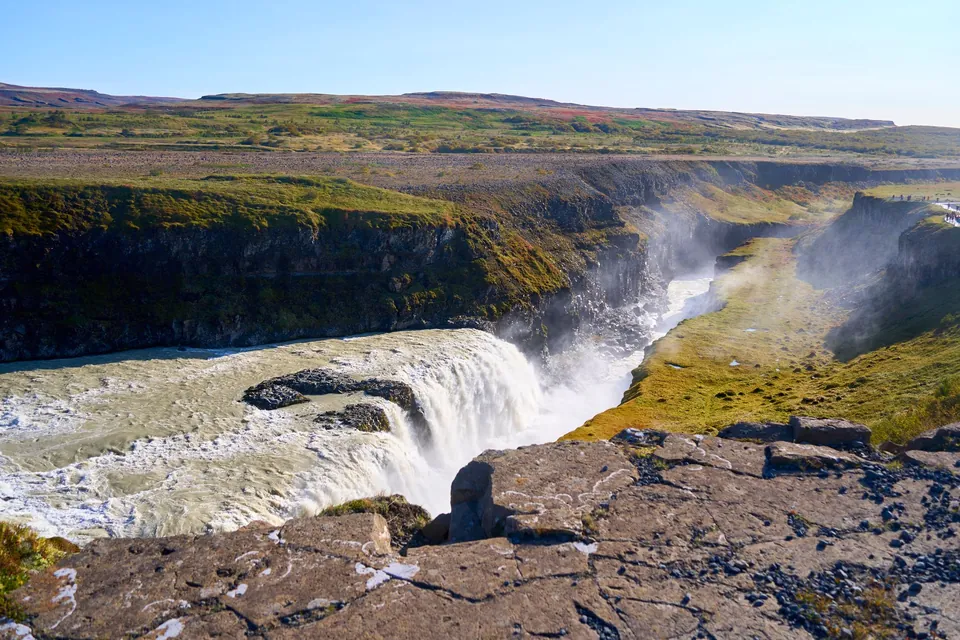
From Þingvellir it's about an hour to the Geysir geothermal area, where Strokkur erupts every few minutes and entry is free. Gullfoss, the two-step waterfall dropping into a canyon, is about ten minutes further on, and its car parks are free. Allow about two hours to drive back to Reykjavík, or stop for an evening soak on the way.
Day 3: South coast waterfalls and the black sand beach
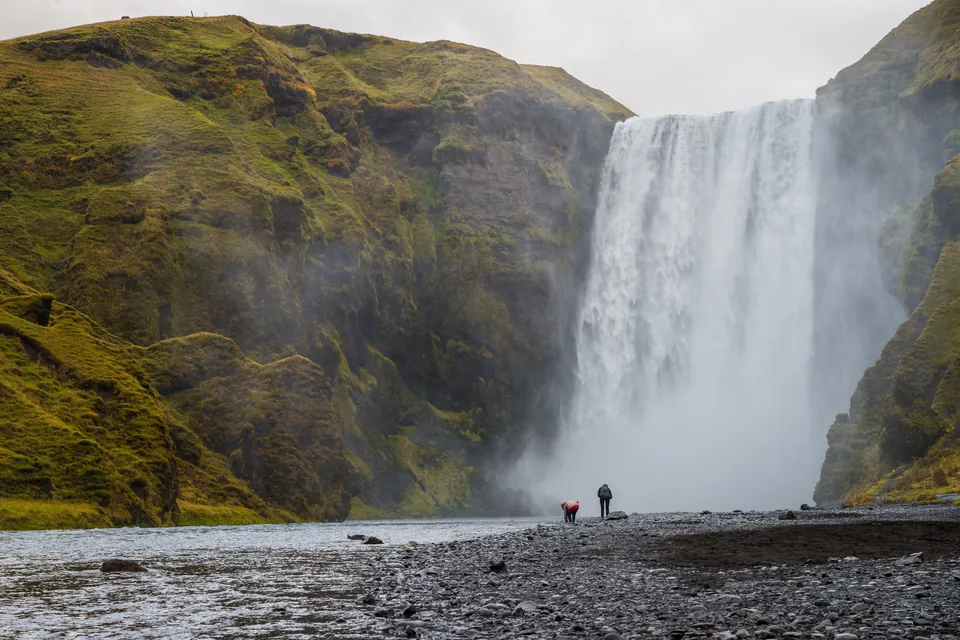
Today you drive about 187 km on Route 1 from Reykjavík to Vík, roughly two and a half hours without stops, though with the waterfalls it fills the day. The road crosses flat farmland before the mountains close in, and the first big stop is Seljalandsfoss, where a path runs behind the falling water. Parking there costs ISK 900 per car for the day. Bring a waterproof layer, because you will get wet.
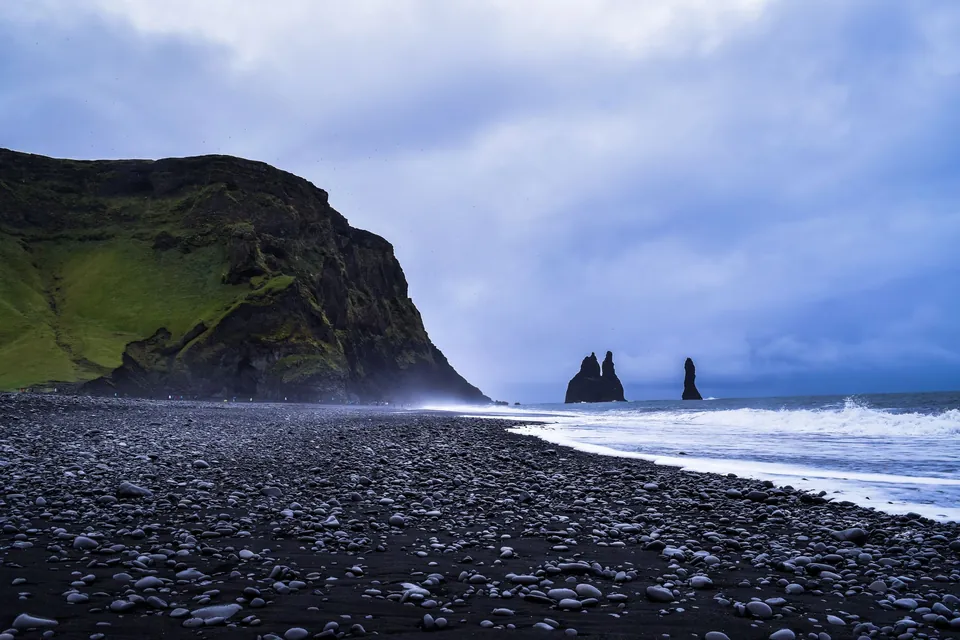
Skógafoss, about 30 minutes further east, is a wide curtain of water about 60 metres high. Walk right up to its base, then climb the long staircase beside it for the view from the top. Then continue to Vík and finish at Reynisfjara, the black beach with basalt columns and the Reynisdrangar sea stacks offshore.
Reynisfjara is beautiful and genuinely dangerous. Sneaker waves arrive without warning and run far up the beach, so stay well back from the water and never turn your back on the sea. Warning lights at the entrance show the day's level: at orange, stay at least 25 metres from the water, and at red the beach is closed and only the viewing area is open. Since winter storms eroded the beach in early 2026, access has often been limited to the upper ridge, so follow the signs and staff on the day.
Day 4: Skaftafell and the glacier lagoon
This is the longest driving day, about 190 km each way from Vík to Jökulsárlón, or roughly two and a half hours in each direction. We still prefer it to a third hotel change, because you can leave your bags in Vík. Leave early and drive the black lava plains of Eldhraun and the wide sands of Skeiðarársandur to Skaftafell, part of Vatnajökull National Park.
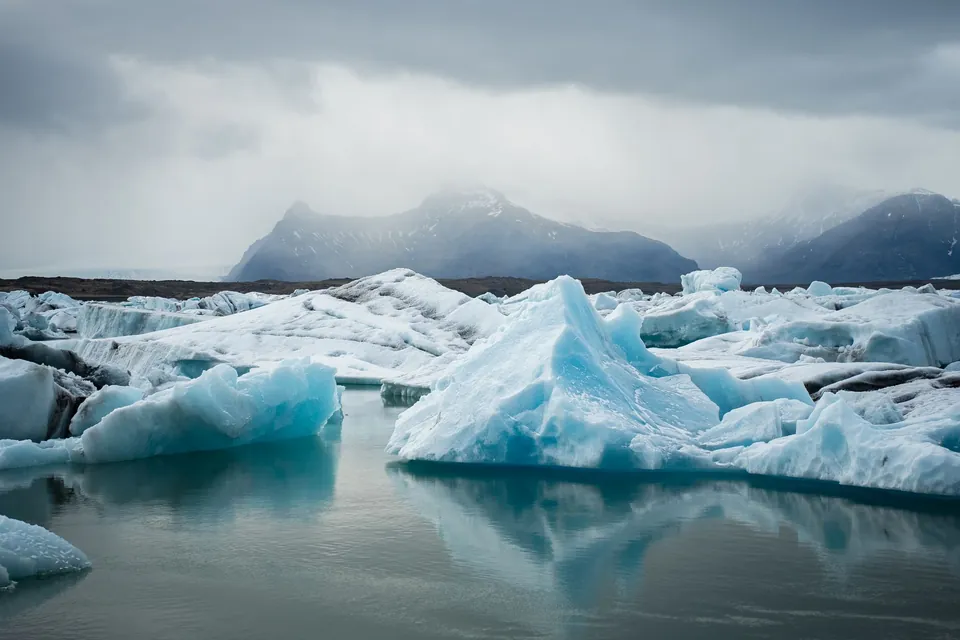
At Skaftafell, walk up to Svartifoss, a waterfall framed by dark basalt columns. The direct path takes about one and a half to two hours there and back. From there it's about 45 minutes to Jökulsárlón, where icebergs break off the glacier and drift slowly towards the sea. Cross the road to Diamond Beach, where smaller pieces of ice wash up on the black sand.
Skaftafell and Jökulsárlón each charge a regional parking fee of ISK 1,110 a day for a car with up to five seats, and the second one is half price on the same day. Boat tours on the lagoon run from about May to November, depending on the ice and weather, so book ahead in summer.
Day 5: Back west, with the stops you missed
Today you drive back to Reykjavík, about two and a half hours without stops. Go first to the Dyrhólaey headland just west of Vík for the view along the coast and the natural rock arch, then pick up anything you rushed on Day 3. Seljalandsfoss is often quieter in the afternoon, and the small Gljúfrabúi waterfall hidden in a narrow gorge nearby is worth the short, wet scramble.
You should reach Reykjavík in the late afternoon. Return to the same hotel if you can, so the last two nights feel settled, and have an unhurried dinner in the old town.
Day 6: A slow day in and around Reykjavík
We keep Day 6 free because Iceland's weather often moves plans by a day, and this is your spare. If everything went to plan, choose one of these:
- Reykjavík on foot: the National Museum, the Settlement Exhibition around a Viking-age longhouse, and coffee on Laugavegur
- Whale watching: boats leave from the old harbour most of the year
- A geothermal lagoon: for a long soak with sea views, closer to the city than the Blue Lagoon
- Snæfellsnes: only for keen drivers, about two to two and a half hours each way
If you're travelling between September and April, look at the aurora forecast on vedur.is tonight. A short drive out of the city lights is often enough on a clear night.
Day 7: Reykjanes and the Blue Lagoon on the way home
The Blue Lagoon is about 20 minutes from Keflavík Airport and about 50 minutes from Reykjavík, so it fits neatly before an afternoon or evening flight. Book a time slot well in advance, since it's usually fully booked. The area sits near Grindavík, where eruptions have happened since late 2023, and the lagoon has closed for short periods during past events, so check its status and the Met Office (vedur.is) on the morning of your visit.
Return the car at the airport with time to spare, and allow a little extra in summer, when the rental desks are busiest.
Getting around (approximate)
- Keflavík to Reykjavík: about 50 km, about 45 minutes by car or Flybus
- Reykjavík to Þingvellir: about 45 minutes
- Þingvellir to Geysir: about 1 hour, then about 10 minutes to Gullfoss
- Gullfoss back to Reykjavík: about 2 hours
- Reykjavík to Vík: about 187 km, about 2.5 hours without stops
- Vík to Jökulsárlón: about 190 km, about 2.5 hours each way
- Reykjavík to the Blue Lagoon: about 50 minutes, then about 20 minutes to the airport
Do you need a 4x4 for a 7-day Iceland itinerary?
For this route between May and September, a two-wheel-drive car is enough, since every road on it is paved. From about October to April we'd pay more for a 4x4 with winter tyres, because snow, ice and strong winds are common on the south coast. Mountain F-roads are for 4x4 vehicles only, and this route doesn't use any.
A few driving basics: the speed limit is 90 km/h on paved rural roads, 80 km/h on gravel and 50 km/h in towns. Many bridges on the south coast are single-lane, so the car closer to the bridge goes first. Never stop on the road for photos, and hold the car door firmly when you open it in strong wind.
Rough budget per person (approximate, excluding flights)
- Accommodation: about ISK 15,000 to 30,000 a night per person in a shared double room, more in July and August
- Car rental and fuel: about ISK 60,000 to 120,000 per person for the week if two people share, plus parking fees of about ISK 1,000 at each paid stop
- Food: about ISK 8,000 to 15,000 a day, less if you shop at supermarkets for lunch
- Activities: a glacier lagoon boat tour, a lagoon soak or a whale-watching trip each adds a meaningful amount, so pick one or two
These are planning estimates, not quotes. Prices move with the season, exchange rates and how many of you share a car and a room.
What to book early
- Rental car: as soon as your dates are firm, especially automatics and 4x4s in summer
- Vík accommodation: a few months ahead for June to August, since the town is small
- Blue Lagoon: a fixed time slot, well ahead
- Glacier lagoon boat tour: a few weeks ahead in summer
- Whale watching or a guided glacier walk: a few days ahead, with a backup day in case of weather
Notes for families, solo travellers and couples
- With kids: keep children close at Reynisfjara at all times, and treat Day 4 as optional with younger ones. A shorter Day 4 to Skaftafell alone still gives you a glacier view and Svartifoss.
- Solo: the whole route is easy to drive alone in summer. In winter, a small-group tour for the glacier day saves a long solo drive in the dark.
- Couples: the evening at Reynisfjara on Day 3 and a slow last morning at the lagoon on Day 7 are the moments we'd protect.
Planning this trip as a group
- Share one larger car rather than two small ones. Fuel and parking are charged per car, so a group of four or five saves a lot.
- Agree on driving shifts for Day 3 and Day 4, and add every driver to the rental agreement.
- Book connecting rooms or a guesthouse in Vík early, since group-sized rooms there go first.
- Keep the plan in one place. With Tripmo's group trip planner, each person's ChatGPT, Claude or Grok adds to one shared plan on a map, so stops and bookings don't get lost in the group chat.
More itineraries
- 7 days in Italy: Rome, Florence and a Bologna day trip
- 7 days in Japan: Tokyo, Kyoto and Osaka in one week
- All itineraries
Questions
Is 7 days enough for Iceland?
It's enough for the south of Iceland done well: Reykjavík, the Golden Circle, the south coast and the Jökulsárlón glacier lagoon. It isn't enough for the full Ring Road, which needs about 10 days or more to enjoy rather than endure.
What is the best Iceland itinerary for 7 days without the Ring Road?
Reykjavík, the Golden Circle and the south coast as far as Jökulsárlón, which is the route on this page. It keeps you on paved Route 1 and lets you stay in just three places.
Do I need a 4x4 for 7 days in Iceland?
Not for this route in summer, since it stays on paved roads. From about October to April we'd choose a 4x4 with winter tyres for the extra grip in snow and wind. The mountain F-roads are open to 4x4 vehicles only and are usually open only in summer.
Can you see the northern lights on a 7-day trip to Iceland?
Often, if you travel between September and April and the sky is clear. Nothing is guaranteed, so check the aurora and cloud forecasts on vedur.is each evening, and the dark south coast around Vík is a good place to look.
Is the Blue Lagoon worth it at the start or the end of the trip?
We put it at the end, on the way to the airport, since it's about 20 minutes from Keflavík and makes a gentle last morning. Book a time slot well ahead, and check that it's open on the day, as it has closed during past eruptions nearby.